The Green Snack Beside the Machine
Inside Taiwan's “Kuai Kuai Culture”
A small green bag of corn puffs stands guard beside Taiwan's servers, ATMs, satellites and stamping presses — a national engineering ritual that asks machines, politely, to behave. Here is where it came from, how its unwritten rules work, and what actually keeps a production line running.
Navigation Jump to a Section
Key Takeaways
- Kuai Kuai (乖乖) is a Taiwanese corn-puff snack whose name means "obedient" or "well-behaved" — so engineers place a bag beside machines to ask them, gently, to behave.
- Only the green coconut-flavor bag goes on machines: green means "go" and "normal operation." Yellow symbolizes wealth (banks); red symbolizes romance (Valentine's Day).
- The bag must be within its shelf life, and eating a bag on duty is taboo — Taiwanese news has blamed "malfunctions" on exactly that.
- The ritual reaches Academia Sinica's labs, the Formosat-5 satellite launch and TSMC's fabs — complete with custom commemorative bags.
- The charm is culture, not maintenance: real uptime comes from process discipline — the quality systems, in-house tooling and preventive maintenance behind every well-run line, including Layana's.
What Is Kuai Kuai Culture? When a Bag of Corn Puffs Becomes a Symbol of Reliability
Walk into a Taiwanese server room or factory floor, and you might spot something that seems wildly out of place: a small green bag of snacks, propped up neatly beside a machine.
It's not someone's abandoned lunch. It's not a snack run gone wrong. It is, very deliberately, Kuai Kuai — and it's there to keep the equipment in line.
The practice is so widespread that it has earned its own name — Kuai Kuai culture (乖乖文化) — and it stretches from university computer labs to precision manufacturing floors like ours in Lukang. Understanding it says a great deal about how Taiwan's engineers think about the machines they care for.
Where Did It Start? The Pun That Launched a Thousand Server Rooms
A snack literally named "behave"
Kuai Kuai (乖乖) is a corn-puff snack made by Kuai Kuai Co., Ltd. (乖乖股份有限公司) — a company with an unexpectedly serious pedigree. It began in 1956 as Nan Fang Hang (南芳行), a Taipei importer of Japanese pharmaceuticals founded by Liao Chin-kang; in 1968 it pivoted from medicine to snacks, launching Kuai Kuai on pharmaceutical-grade production standards, and in 1974 it formally registered under the name its star product had made famous.
The name means "obedient" or "well-behaved" — the same words a parent uses to calm a fussy toddler on the MRT, or a dog owner uses on an overly excited leash-puller in the park.
At some point, Taiwanese engineers noticed that "behave" is exactly what you want your hardware to do. A machine running smoothly is kuai kuai. A machine throwing errors at 2 a.m. is decidedly not. The wordplay was too good to pass up.
Who put the first bag on a machine?
Nobody agrees on exactly who started it, and that's part of the charm. Ask around and you'll get several different origin stories: an engineer whose uncle swears he was using the snack on hand-held calculators decades ago; a graduate student whose crashing thesis-writing computer supposedly settled down the moment a green bag appeared on top of it; and newspaper archives that only pick up the trail for certain around 2008, when the Taiwanese press reported engineers tucking a bag into a malfunctioning ATM.
However it actually started, the practice spread through Taiwan's tight-knit tech and research circles and became a full-blown tradition — one now old enough that even the people who practice it can't quite agree on its origin story, which somehow makes it feel more authentic, not less.
What Are the Rules? The Etiquette Nobody Wrote Down, but Everyone Follows
Like any good superstition, this one comes with etiquette — three rules, universally observed and nowhere officially recorded.
It has to be green
Specifically, the coconut-and-butter flavor. The logic borrows straight from the language of machinery itself: green means "go," green means "normal operation," green means everything's fine. Red and yellow packages are treated the way you'd treat a warning light.
It can't be expired
An out-of-date snack guarding a machine is worse than no snack at all, so the bag gets swapped out well before its sell-by date. Fresh charm, fresh luck.
You do not eat it
Once a bag takes up its post, it's off-limits — treated less like food and more like a piece of equipment. Taiwanese news has occasionally reported "malfunctions" blamed on someone snacking on the guard duty.
The Kuai Kuai color code
According to the company itself, each package color carries its own meaning — and only one of them belongs anywhere near a nervous server.
| Package | Flavor | What It Symbolizes | Where You'll See It | Machine Duty? |
|---|---|---|---|---|
| Green | Coconut & butter | "Go" — normal operation, all systems fine | Server rooms, labs, fabs, factory floors | Yes — the only one |
| Yellow | Five-spice savory | Wealth and prosperity | Banks and finance offices | No — reads as a warning light |
| Red | Chocolate | Romance | Around Valentine's Day | No — reads as an alarm |
More Than a Meme: Which Institutions Practice Kuai Kuai Culture?
It would be easy to file this under "cute superstition and nothing more," but Kuai Kuai has quietly worked its way into some remarkably serious places.
Academia Sinica, Taiwan's top research institution, keeps them in its labs. Before the 2017 launch of Formosat-5, Taiwan's first domestically built satellite, engineers at the National Applied Research Laboratories piled bags of Kuai Kuai around a model of the satellite ahead of launch — and the company even printed a special commemorative bag for the occasion. In 2016, after an earthquake damaged a TSMC production line in southern Taiwan, engineers marked the repair by ordering a custom-printed batch for the team, complete with its own limited-edition design; those bags reportedly resold online for many times their original price.
It's easy to see why more than one outlet has called this Taiwan's unofficial national engineering ritual. When the BBC covered it in 2021, the story went semi-viral among Taiwanese engineers, who joked online that a "national secret" had finally leaked to the rest of the world.
Milestones of a superstition
Before the Snack, a Pharmacy
Liao Chin-kang founds Nan Fang Hang (南芳行) in Taipei, importing Japanese pharmaceuticals — the unlikely ancestor of Taiwan's most famous good-luck charm.
Kuai Kuai Is Born
The company pivots from medicine to food and launches Kuai Kuai on pharmaceutical-grade production standards. The corn puff is an instant national snack; in 1974 the company formally registers as Kuai Kuai Co., Ltd. (乖乖股份有限公司).
Whispered Origins
Bags start appearing on calculators, thesis-writing computers and lab instruments. The practice spreads through Taiwan's tight-knit tech and research circles — with no agreed founding moment, which only adds to the charm.
The Press Takes Note
Taiwanese newspapers document engineers tucking a green bag into a malfunctioning ATM — the first firmly dated public record of the ritual.
TSMC's Custom Batch
After an earthquake damages a production line in southern Taiwan, TSMC engineers mark the repair with a custom-printed limited-edition batch of Kuai Kuai.
Aftermarket: the commemorative bags reportedly resold online for many times their original price.
Kuai Kuai Goes to Space (Almost)
Ahead of the launch of Formosat-5, Taiwan's first domestically built satellite, National Applied Research Laboratories engineers pile bags around a model of the spacecraft — and Kuai Kuai Co., Ltd. prints a commemorative bag for the mission.
The "National Secret" Leaks
The BBC publishes "The 'good luck' snack that makes Taiwan's technology behave." Taiwanese engineers joke online that the rest of the world finally knows.
From Fabs to Factory Floors
Server rooms, research labs, semiconductor fabs and precision factories across Taiwan keep a green bag on watch — a ritual practiced with a smile, and never skipped lightly.
Superstition, or Something More Useful?
Skeptics have floated the obvious rational explanation: it's a placebo, nothing more, and any correlation between a green bag and a stable server is coincidence dressed up as folklore.
Maybe so. However, does it really have to be purely rational? Pilots have pre-flight rituals. Athletes have routines they'd never admit are irrational, and wouldn't skip anyway. A green bag of corn puffs doesn't patch a firmware bug or replace a maintenance schedule — nobody in Taiwan's tech industry believes that it does.
What it does is mark a piece of equipment as cared for. It's a small, human ritual in an environment built almost entirely around precision, procedure, and things that are supposed to never go wrong.
It marks care. A bag on a machine says someone is paying attention to this equipment — the same instinct behind a well-kept maintenance log.
It builds shared language. "Did you change the Kuai Kuai?" is a lighter way of asking "is this machine being looked after?"
It lowers the temperature. On the nights when something does go wrong, a familiar green bag on top of the rack is, if nothing else, a reason to smile before you start debugging.
The Discipline Behind the Charm: What Actually Keeps Machines Running
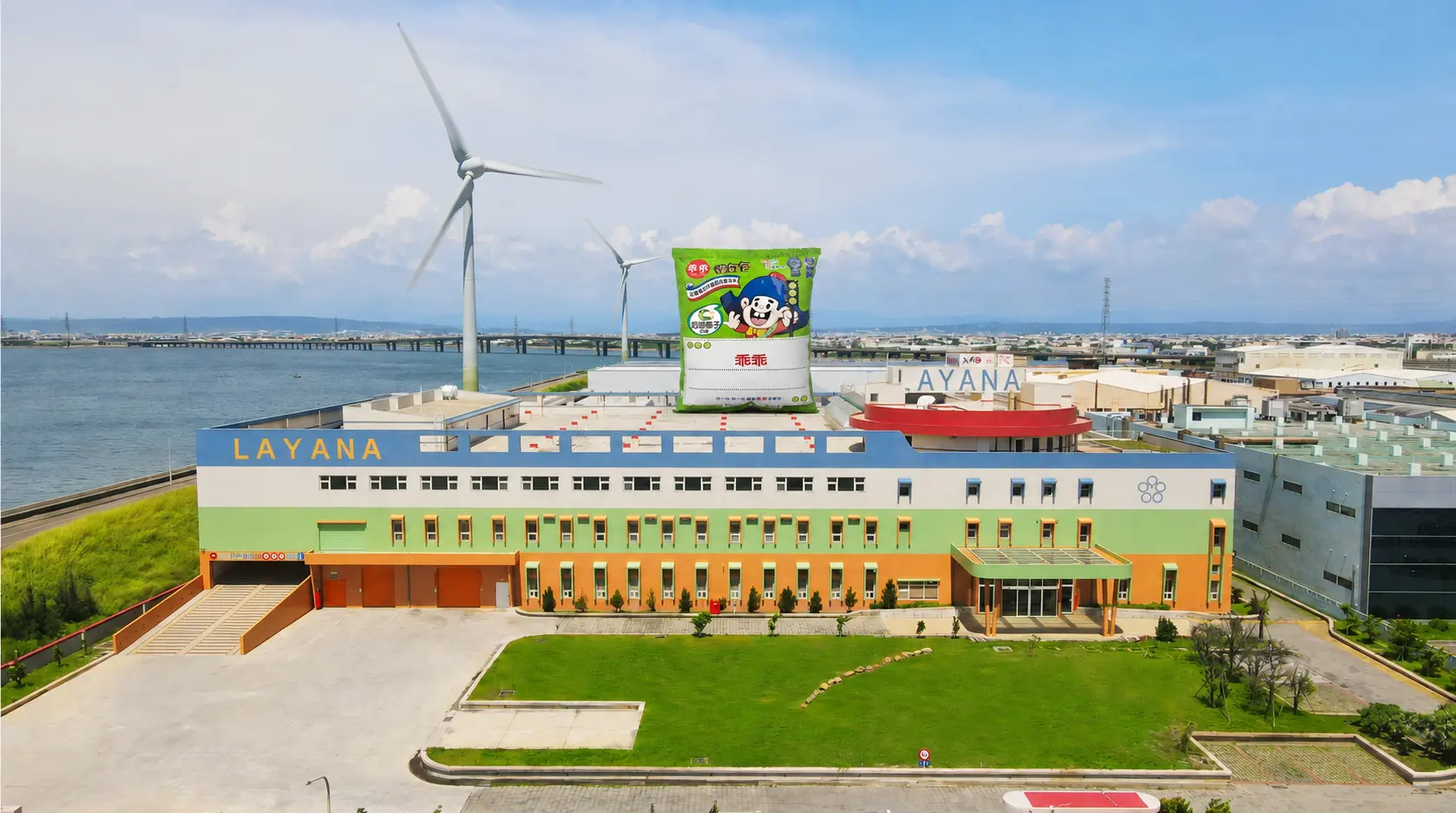
Charms make good stories, but they've never been what actually keeps a production line running. For manufacturers like Layana, real reliability comes from decades of process discipline — people and systems working in concert, not left to chance.
Controlled Manufacturing
Vertically integrated manufacturing solutions — stamping, molding and assembly under one roof — so every process variable stays inside our own four walls.
Careful Tooling
In-house tooling design and fabrication with preventive maintenance schedules that keep dies — and the presses they run in — genuinely kuai kuai.
Rigorous Inspection
Application-specific inspection and layered checks under an IATF 16949-certified quality system — trust, but verify, every part.
Continuous Improvement
Six Sigma programs and quality-control circles that hunt down variation before it ever becomes a 2 a.m. phone call.
Traceability at Every Step
From coil and resin lot to finished assembly, every component's history is documented — reliability you can audit, not just believe in.
A Cared-For Factory
A certified Green Factory runs on the same principle as the green bag: equipment, energy and environment all looked after deliberately.
Whether the product is a precision automotive component or an industrial part, consistency is built by people and systems working in concert. Still, the next time you're touring a Taiwanese factory and spot a green bag sitting quietly next to a machine, you'll know it isn't misplaced lunch.
It's a small, very Taiwanese reminder that behind every well-run system, however advanced, there are people who care enough to ask it, gently, to behave.
About Layana
Layana is a Taiwan-based manufacturing partner specializing in precision metal-to-plastic assemblies. Our integrated capabilities include in-house tooling design and development, precision metal stamping, advanced plastic injection molding — including insert molding and overmolding — assembly and sub-assembly services, and comprehensive DFM engineering support.
We combine technical expertise with disciplined production systems to deliver consistent quality and build reliable, long-term manufacturing partnerships.
Tooling workshop — in-house die and mold design, fabrication and maintenance.
Metal stamping — precision progressive and transfer-die production.
Injection molding — plastic, insert and overmolding for metal-to-plastic assemblies.
Assembly & quality — automated assembly with application-specific inspection under IATF 16949.
Related Layana Resources
Enjoyed the culture story? Here is the engineering behind the machines the green bags watch over.
Manufacturing Solutions
Precision metal stamping, plastic & bi-material injection molding, and total engineering — one facility, every discipline.
Quality Management
IATF 16949, Six Sigma, application-specific inspection and continuous improvement — how reliability is engineered, not wished for.
Green Factory
The other meaning of green at Layana — our certified sustainable manufacturing journey in Lukang.
Overmolding
Integrate plastic with metal or other substrates to create durable, high-performance components in a controlled manufacturing process.
FAQ — Kuai Kuai Culture
What is Kuai Kuai culture? +
Why must the Kuai Kuai bag on a machine be green? +
What do the yellow and red Kuai Kuai bags mean? +
Can you eat a Kuai Kuai bag that is guarding a machine? +
Who makes Kuai Kuai, and when did the snack launch? +
Does Kuai Kuai actually keep machines from failing? +
Do serious institutions really practice Kuai Kuai culture? +
References
Facts in this article are drawn from the snack maker's own brand history and from public reporting. No images from these sources are reproduced on this page.
- Kuai Kuai Co., Ltd. (乖乖股份有限公司) — official brand history: founding of 南芳行 (1956), launch of Kuai Kuai (1968), registration as Kuai Kuai Co., Ltd. (1974), and the symbolism of the green, yellow and red packages. kuai.com.tw.
- BBC — Ngo, H., "The 'good luck' snack that makes Taiwan's technology behave" (2021).
- Taipei Times — "How a snack protects Taiwan's tech" (2020), on Academia Sinica, the Formosat-5 launch and the 2008 ATM report.
- The News Lens (關鍵評論網) — on the origin stories of 乖乖文化 and why only the green, coconut-flavor package guards machines.
- Public reporting on the 2016 southern Taiwan earthquake — TSMC's custom commemorative Kuai Kuai batch and its aftermarket resale prices.