Walk Taiwan
1,000 km Around the Island, Step by Step
The Walk Taiwan program is Layana's social-impact extension of its ESG principles — awarding certificates to those who complete the more-than-1,000-kilometre walk around the island, and building three pillars under every step: environmental sustainability, pedestrian rights, and personal health.
Navigation Jump to a Section
Key Takeaways
- Walk Taiwan is Layana's ESG project that awards walking certificates to those who complete the 1,000+ km walk around the island.
- The program is built on the three pillars Layana lives across its operations: Environmental Sustainability, Social Responsibility (Pedestrian Rights), and Personal Health.
- It promotes low-carbon (and even zero-carbon) exploration of Taiwan, Leave No Trace ethics, and routes that avoid ecologically sensitive areas.
- Certification is straightforward: mobile GPS app for supporting documents, itinerary form during the walk, and application form on completion — with photos, journals or videos as backup evidence.
- Layana hosts regular Walk Taiwan Sharing Sessions across the island where finishers — "walkers" — share their stories and inspire the next group.
- The project is built for all ages — with health guidance tailored to different age ranges so every participant can benefit.
Our Vision — A Primary Walking Route Around Taiwan
Layana firmly believes that environmental protection, social responsibility, and corporate governance (ESG) are the foundation for sustainable business development. We incorporate ESG principles into our daily operations — and through the Walk Taiwan project, we extend them beyond the factory. We award certificates to those who complete the walk around Taiwan, encouraging everyone to accomplish this remarkable feat of more than 1,000 kilometres.
Taiwan already has a primary walking route around the island. Walk Taiwan exists to make that route legible, accessible and meaningful — so a long walk becomes a tangible act of environmental care, social advocacy and personal wellbeing.
Beyond tourism, the project is a model for practising ESG. Each walker leaves a smaller footprint than a tourist, pays attention to the spaces pedestrians actually use, and returns more attuned to the island they live on. That is the outcome we are after.
The Three ESG Pillars of Walk Taiwan
Walk Taiwan is built on the same three pillars Layana lives across its operations. Each pillar turns the walk from a personal challenge into a contribution.
Protecting Taiwan's Natural Treasures
Encourage exploring the beauty of Taiwan in a low-carbon, even zero-carbon way — reducing the burden of tourism on the environment.
Reducing Carbon Footprint
Promote walking instead of traditional high-carbon transportation, with environmental education that helps participants cut emissions during the journey.
Protecting Biodiversity
Carefully select walking routes to avoid ecologically sensitive areas, and provide ecological education so walkers understand and respect Taiwan's rich biodiversity.
Leave No Trace
Advocate the Leave No Trace principle: participants take away their own trash and actively clean up along the way — jointly protecting Taiwan's natural environment.
Advocating for Pedestrian Rights
Pedestrian rights are a key indicator of urban civilisation. Walk Taiwan turns long-distance walking into practical advocacy for safer streets, better planning, and stronger policy.
Raising Awareness
Collaborate with local governments to incorporate pedestrian-priority designs into urban planning, improving the walking environment and reducing pedestrian accidents.
Safer Walking Environments
Plan safer walking routes, provide safety equipment and education, raise pedestrian safety awareness, and encourage public investment in walking infrastructure.
Policy Advocacy
Through awareness campaigns, raise public attention to pedestrian rights and recommend that government departments invest more in pedestrian roads and facilities.
Healthy Living for All Ages
Walk Taiwan is about more than scenery. It is a practical, all-ages programme for cardiovascular fitness, mental wellbeing, and a healthier daily rhythm.
Healthy Lifestyle
Encourage walking as a form of exercise — improving cardiovascular function, strengthening physical fitness and reducing daily stress.
Mental Health
Provide extended time outdoors so participants can relax, reduce stress and enjoy the therapeutic experience of being in nature.
Benefits for All Ages
Welcome participation from every age group, with health guidance tailored to different age ranges so every walker can benefit safely.
Walking Certification Process
Earning the Walk Taiwan certificate runs through three steps. For walks completed before 1 January 2027, GPS records can be used for verification — with photos, journals and videos accepted as supporting evidence.
Use a mobile GPS app
Use a mobile GPS app throughout the walk to compile your supporting documents — your tracked routes are the primary proof of having walked around Taiwan.
Fill out the itinerary form
Document each leg of the walk on the itinerary form as you go, so the journey is traceable from start to finish.
Submit the application form
After completing the round-island walk, fill out and submit the application form to receive your Walk Taiwan certificate.
Accepted supporting evidence
For walks completed before 1 January 2027, supporting evidence may include — but is not limited to — the following:
Walking photos
Photographs taken along the route, illustrating the journey and key waypoints.
Personal journals or reflections
Paper, electronic format, or online posts — all acceptable as a personal record of the walk.
Video recordings
Video clips that document segments of the walk, especially harder-to-photograph stages.
For full details, please refer to the Walk Taiwan website's Certification Process section.
Walk Taiwan Sharing Sessions
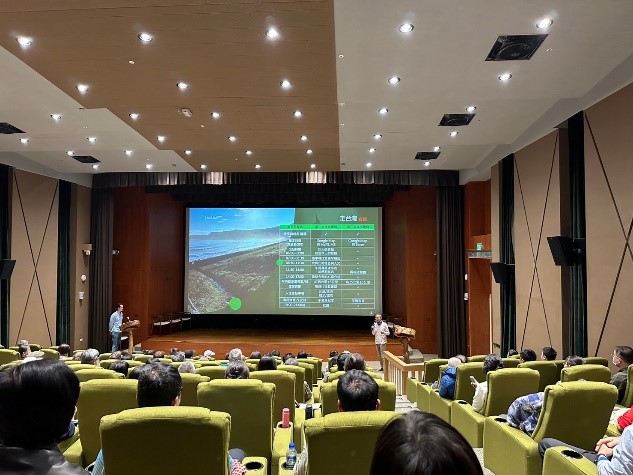
Layana regularly organises Walk Taiwan Sharing Sessions across the island. We invite people who have completed the walk — often called "walkers" — to share their unique stories.
Every walker sets out for different reasons — a milestone birthday, a career break, a personal challenge, a memorial, a search for clarity. Their love for this land, however, is the same. Sharing sessions turn that shared affection into community.
Layana's Walk Taiwan project is more than a tourism programme. It is a working model of ESG in practice: environmental sustainability, social progress and personal health, kept alive by the people doing the walking. We will continue to promote the project, expand its impact, and join forces with more partners to contribute to Taiwan's future.
Through ongoing efforts and collaboration, Walk Taiwan will become an important milestone in Taiwan's sustainable development — a better future for the island, walked into being one kilometre at a time.
Related ESG Programmes
Walk Taiwan is the social-impact extension of the same ESG principles Layana applies inside the factory. It sits inside a wider portfolio of environmental and safety credentials.
Walk Taiwan
The 1,000+ km round-island walking programme — this page.
You are hereGreen Factory
Taiwan's MOEA label — green building plus cleaner production combined.
ISO 14001
Environmental Management System — the PDCA cycle behind operational ESG.
ISO 14064
Greenhouse gas quantification — verified low-carbon credentials.
ISO 45001
Occupational health & safety — the same care for people, indoors.
Cleaner Production
General Industry Clean Production Assessment passed (2022).