Micro Injection Molding –
Ultra-Small, High-Precision Plastic Components
Layana delivers micro injection molding and precision plastic manufacturing for components requiring micrometer-level tolerances, complex miniature geometries, and consistent dimensional repeatability — integrated with in-house tooling, metal stamping, insert molding, overmolding, and full assembly under one IATF 16949-certified manufacturing roof.
Navigation Jump to a Section
Why OEMs Choose Layana for Micro Injection Molding and Precision Plastic Manufacturing
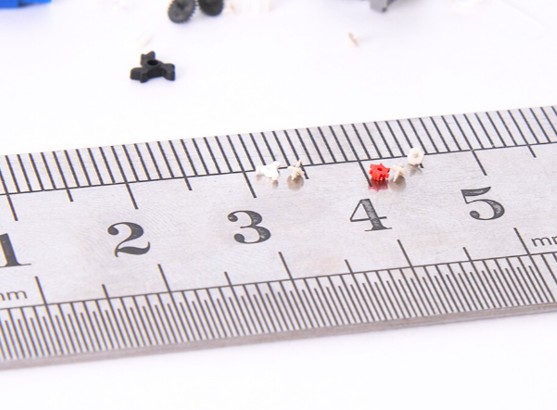
Micro injection molding is a highly specialized form of plastic injection molding used when a component demands ultra-small dimensions, complex miniature geometries, and micrometer-level dimensional repeatability. Unlike conventional injection molding — which targets larger part masses, standard wall thicknesses, and moderate tolerances — micro injection molding uses purpose-built equipment, engineering-grade polymers, and precision tooling to produce parts weighing less than a gram with feature tolerances between 10 µm and 100 µm.
Micro injection molding enables sub-gram plastic components with 10–100 µm tolerances and complex miniature geometries — indispensable for medical devices, electronics, automotive sensors, and aerospace hardware.
Choosing the right manufacturer means evaluating tooling precision, polymer expertise, process control, and whether metal-plastic integration (insert molding, overmolding) is available under one roof. Layana offers all of these within an IATF 16949-certified manufacturing ecosystem with 44+ years of tooling experience.
OEMs choose Layana when they need more than a single-process injection molder. Layana combines in-house tooling, micro and precision injection molding, insert molding, overmolding, metal stamping, and assembly within one manufacturing ecosystem — allowing customers to evaluate feasibility, tooling strategy, quality requirements, and scalability from RFQ through mass production.
With more than 44 years of tooling and manufacturing experience, Layana supports projects requiring tight tolerances, stable repeatability, and integrated production for both precision plastic and metal-plastic hybrid components. For automotive and high-reliability applications, Layana is IATF 16949 certified and operates under structured quality, documentation, traceability, and risk-control practices.
Layana's integrated manufacturing route reduces the need to manage multiple suppliers — enabling more efficient development of micro-scale plastic, insert-molded, and overmolded components from prototype to production scale.
In-house tooling support — precision EDM mold design, fabrication, maintenance, and production optimization for micro-cavity and micro-core tooling.
IATF 16949 discipline — automotive and high-reliability quality requirements from APQP through PPAP.
Metal + plastic integration — micro-molded, stamped, insert-molded, or overmolded components in one supplier ecosystem.
Prototype-to-mass-production — DFM feasibility review through scalable, repeatable manufacturing.
RFQ & DFM engineering — drawings, material selection, tolerances, wall thickness, and cost drivers reviewed before tooling investment.
Key Manufacturing Capabilities for Micro Injection Molding & Precision Plastic Parts
| Category | Capability / Specification |
|---|---|
| Tooling experience | More than 44 years of precision mold design and fabrication |
| Mold development | In-house EDM and precision micro-machining for hardened steel tooling |
| Injection machines | Dedicated micro injection units; conventional injection machines up to 250T |
| Orientation | Vertical and horizontal injection machines available |
| Minimum wall thickness | Approximately 0.1 mm, subject to material, flow path, and gate design |
| Tolerance capability | 10 µm to 100 µm, subject to geometry, material behavior, tooling design, and inspection requirements |
| Material compatibility | Engineering thermoplastics (PEEK, LCP, POM, PEI, PSU, PC, PA, PP), LSR, thermosets, TPEs |
| Integration | Metal stamping, insert molding, overmolding, and component assembly under one roof |
| Note | Subject to geometry, material behavior, tooling design, and inspection requirements — evaluate during DFM |
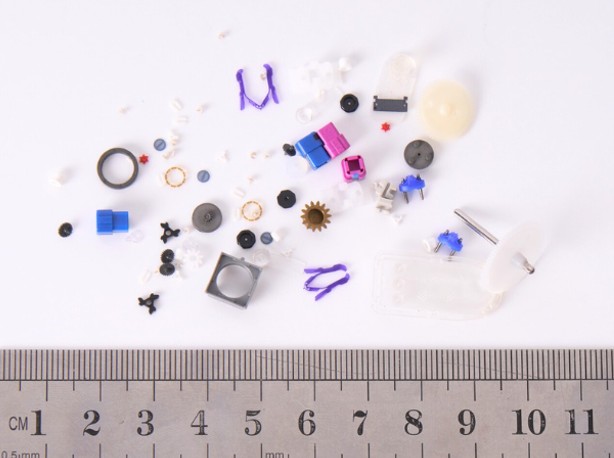
Example of Micro Injection Molded Components Manufactured by Layana
From medical microfluidics and precision electronics connectors to automotive sensor housings and miniature optical elements, Layana has delivered precision micro injection molded parts across demanding industries — with tight dimensional repeatability and quality system readiness built in.
Medical Microfluidic Component
Lab-on-chip body with sub-millimeter channels. PEEK
Precision Electronics Connector
Micro connector body with tight pin spacing. LCP
Automotive Sensor Housing
ADAS sensor body with integrated snap features. PA6 GF
Surgical Instrument Blank
Biocompatible miniature tool component. POM
Micro Optical Lens Element
Miniature lens for compact camera modules. PMMA
IoT Wearable Sensor Body
Ultra-small housing for wearable IoT device. PC / ABS
The core engineering value of micro injection molding is dimensional integrity at miniature scale — a functional plastic component with complex geometry, micrometer-level tolerances, and consistent repeatability across high production volumes.
Proven Across Demanding Industries
Layana supports sectors where miniaturization, tight tolerances, and integrated metal-plastic manufacturing are critical to product performance and supply chain efficiency.
Automotive & EV
ADAS sensor housings, micro gears, miniature valves for fluid control, actuator components, and precision cable-routing guides.
Electronics & IoT
Micro connectors, chip housings, micro lenses for cameras, miniature switches, and sensor bodies for wearables and IoT devices.
Medical Devices
Microfluidic lab-on-chip systems, surgical tool blanks, drug delivery components, biocompatible PEEK implants, and single-use precision parts.
Aerospace & Industrial
Micro-fasteners, precision fittings, satellite fluid management parts, avionics insulation components, and miniature mechanical assemblies.
Why Micro Injection Molding Matters for Precision Manufacturing
Micro injection molding matters when miniaturization is not optional — when the component's dimensional precision, geometry complexity, and material properties directly determine product performance, assembly fit, functional reliability, and regulatory acceptance.
Miniaturization Without Compromise
Ultra-small geometries — holes, snap features, ribs, flexures, threads — are achievable at sub-gram mass and micrometer precision without sacrificing functional performance.
Functional Precision in Service
In medical, automotive, and electronics applications, dimensional consistency directly influences how components fit, seal, conduct, or articulate in the final assembly.
High-Volume Cost Efficiency
In high-volume projects, micro injection molding produces repeatable, inspection-ready parts at lower unit cost than CNC machining or EDM — once tooling and process are validated.
High-Performance Polymer Versatility
PEEK, LCP, PEI, POM, and PSU deliver combinations of chemical resistance, thermal stability, biocompatibility, and dimensional integrity that standard resins cannot match at micro scale.
Biocompatible & Regulatory-Ready
Medical-grade resins such as PEEK and medical-grade POM support biocompatibility requirements — important for implants, surgical tools, and drug delivery systems in regulated markets.
Quality System Readiness
Supports APQP, PPAP, PFMEA, SPC, and MSA documentation — the traceability and risk-control structure required for high-volume precision production.
What Is Micro Injection Molding?
Micro injection molding is a highly specialized evolution of conventional injection molding, developed specifically to produce ultra-small, highly precise plastic components. Parts typically weigh less than 1 gram and feature micrometer-scale dimensions and tolerances often between 10 µm and 100 µm. The process demands purpose-built equipment — including small-diameter screws or dedicated plunger plasticizing stages — to precisely control milligram-level shot volumes, melt temperature uniformity, injection speed, and cavity pressure.
Because micro injection performance depends on a tightly controlled relationship among material properties, tooling precision, gate design, processing window, and cooling uniformity, part feasibility should always be evaluated during DFM. Layana's tooling and process engineering teams review customer drawings, tolerance requirements, and functional specifications to determine whether micro injection molding, conventional injection, insert molding, or a hybrid process is the most appropriate route.
High-performance polymers such as POM, PEEK, and LCP are frequently specified for micro injection work because of their superior melt flow behavior at micro scale, dimensional stability during solidification, and resistance to the thermal and chemical environments in which miniature components typically operate.
Material selection for micro injection is more constrained than for conventional injection — flowability, shrinkage predictability, and moisture sensitivity must all be validated before tooling investment to avoid dimensional drift and part-to-part variation in production.
Scale — Produces components weighing under 1 gram with sub-millimeter or micrometer-scale features, versus grams-to-kilograms in conventional molding.
Precision — Achieves tolerances of 10–100 µm, versus ±0.1 mm to ±0.5 mm typical in conventional injection molding.
Equipment — Requires dedicated micro screws, plunger systems, and enhanced temperature and pressure control at milligram shot volumes.
Materials — Demands engineering-grade polymers optimized for flowability, thermal stability, and dimensional repeatability at micro scale — not all standard resins qualify.
Micro Injection Molding Process: Step-by-Step
Micro injection molding feasibility depends on a controlled relationship among material properties, tooling geometry, gate size and location, cooling circuit design, and processing window. Wall thickness, draft angles, and ejector pin placement are all more critical at micro scale than in conventional injection molding. Always evaluate part feasibility and material behavior during DFM before committing to hard tooling investment.
Materials Suitable for Micro Injection Molding and How They Perform
Supported Materials at a Glance
Not all materials achieve the same tolerance, surface finish, or dimensional repeatability in micro injection molding. Flowability, shrinkage, and moisture sensitivity vary significantly across polymer grades. Capability depends on material grade, part geometry, wall thickness, gate design, and tooling for each specific part — each project should be evaluated individually during DFM.
Advantages of Micro Injection Molding for Precision Component Manufacturing
Micro injection molding delivers a unique combination of miniaturization capability, material versatility, and production efficiency — making it the preferred route when part size, tolerance, and functional complexity are beyond what conventional injection or machining can deliver at acceptable cost.
Sub-Gram Part Production
Produces plastic components weighing under 1 gram with sub-millimeter features, tolerances down to 10 µm, and complex miniature geometries in a single production cycle.
Micrometer Tolerance Consistency
When tooling, material, and process parameters are controlled and validated, dimensional consistency supports tight assembly fits, precision mating interfaces, and quality system acceptance criteria.
Complex Geometry in One Operation
Snap features, undercuts, thin walls, threads, ribs, and flexures are achievable in a single injection cycle — replacing multi-step machining or assembly operations.
High-Performance Polymer Compatibility
PEEK, LCP, PEI, PSU, and other engineering resins offer combinations of biocompatibility, thermal stability, and chemical resistance that enable reliable performance in demanding environments.
Reduced Downstream Operations
Eliminates or reduces CNC secondary operations, polishing, and finishing steps when part geometry, material selection, and process capability are aligned from DFM through production.
Integrated Manufacturing Path
Micro-molded plastic components combine naturally with metal stamping, insert molding, overmolding, and component assembly — enabling fully integrated miniature assemblies within one supplier ecosystem.
Industrial Applications and High-Value Component Examples
Micro injection molding is selected across industries where miniaturization, dimensional precision, material performance, and production volume combine to make conventional manufacturing impractical or uneconomical.
| Industry | Micro Injection Component Examples | Why Precision Matters |
|---|---|---|
| Medical Devices | Microfluidic lab-on-chip systems, high-precision surgical tool blanks, drug delivery components, biocompatible PEEK implants, single-use precision parts | Biocompatibility, sterility, and dimensional consistency are all critical in regulated medical contexts where tolerance directly affects device function and patient safety. |
| Electronics & IoT | Micro connectors and chip housings, sensors for wearables and IoT, micro lenses for compact cameras, miniature switches and precision relay parts | Tight dimensional specs enable reliable automated assembly and consistent optical or electrical performance at miniature scale. |
| Automotive & EV | Micro gears and actuator components, miniature valves for fluid control, ADAS sensor housings, precision cable-routing guides | Functional reliability in high-vibration, high-temperature automotive environments requires precise dimensional repeatability and validated material performance. |
| Aerospace | Micro-fasteners and precision fittings, satellite fluid-management components, avionics insulation parts, lightweight micro structural interfaces | Weight reduction, dimensional reliability, and material performance are all critical in aerospace environments with extreme operating conditions. |
| Consumer & Wearables | Components in wearable devices, smartwatches, precision toys, miniature household gadgets, and ergonomic micro handle parts | High-cycle durability, aesthetic quality, and miniaturization drive the need for precision micro molding over conventional injection or machining. |
Layana Micro Injection Molding and Precision Manufacturing Capabilities
Layana is an IATF 16949-certified manufacturer with more than 44 years of tooling and manufacturing experience, in-house mold design, and an integrated manufacturing ecosystem that connects micro injection molding with metal stamping, insert molding, overmolding, and assembly.
| Capability | Layana Detail |
|---|---|
| Manufacturing Positioning | IATF 16949-certified precision injection molder and stamping manufacturer serving global OEM-oriented projects. |
| Engineering Experience | More than 44 years of tooling, mold design, and precision plastic manufacturing experience. |
| In-House Tooling | In-house EDM and precision micro-machining for hardened steel micro-cavity and micro-core tooling — design, fabrication, and maintenance under one roof. |
| Injection Machines | Dedicated micro injection units; vertical and horizontal machines up to 250T for conventional injection molding and insert molding. |
| Tolerance Capability | 10 µm to 100 µm, subject to part geometry, material behavior, tooling design, and inspection plan — confirmed during DFM. |
| Minimum Wall Thickness | Approximately 0.1 mm, subject to material flow behavior, gate design, and part geometry. |
| Inspection | CMM, 3D scanning, optical comparators, and automated vision systems — for dimensional verification at micro scale. |
| Quality System | IATF 16949 foundation with APQP, PPAP, PFMEA, MSA, SPC, GR&R, control plans, and supplier quality practices. |
| Sustainability | Green Factory certified; ISO 14001 and ISO 14064 greenhouse gas reporting — supporting customer ESG supplier qualification. |
| Adjacent Processes | Metal stamping, progressive die, insert molding, overmolding, two-shot injection, and component assembly within one manufacturing ecosystem. |
Layana's Integrated Precision Manufacturing Capabilities
In-House Tooling & Mold Design
End-to-end mold design, EDM fabrication, and maintenance — fast transition from prototype tooling to production for micro injection and precision molding projects.
Insert Molding & Overmolding
Micro-molded or stamped metal components integrated into plastic housings, sealing features, or multi-material assemblies within one supplier and manufacturing flow.
Metal Stamping & Micro Stamping
Complementary metal forming for projects where micro-molded plastic components integrate with stamped terminals, leadframes, contacts, or structural metal elements.
Metrology & Quality System
CMM, 3D scanning, optical inspection, and SPC — backed by APQP, PPAP, PFMEA, MSA, GR&R, and IATF 16949 discipline from prototype through mass production.
Green Factory and Sustainability
Customers increasingly evaluate manufacturing partners not only on part quality, delivery performance, and cost, but also on environmental transparency, energy efficiency, waste reduction, greenhouse gas management, and responsible factory operation.
Layana has obtained Green Factory certification and is ISO 14001 certified for its environmental management system, supporting a structured approach to environmental responsibility, compliance, monitoring, and continuous improvement throughout the manufacturing operation.
Layana's cleaner production efforts include water recycling and rainwater recovery systems, CO₂ emissions quantification, material recycling programs, energy-saving equipment, heat recovery systems, production-line efficiency improvements, and dust and noise control measures.
Layana is also ISO 14064-certified for greenhouse gas quantification, supporting transparent CO₂ emissions tracking and reporting for customers with ESG or low-carbon supply chain qualification requirements.
Green Factory — certified cleaner production and responsible factory operation in Lukang, Changhua, Taiwan.
ISO 14001 — environmental management system covering compliance, monitoring, and continuous improvement.
ISO 14064 — greenhouse gas quantification supporting transparent CO₂ tracking and ESG supplier qualification.
Cleaner production — water recycling, rainwater recovery, energy-saving equipment, heat recovery, and dust / noise control.
FAQ — Layana Micro Injection Molding
What is micro injection molding? +
How does micro injection molding differ from conventional injection molding? +
What tolerances can micro injection molding achieve? +
What materials are used in micro injection molding? +
What industries use micro injection molding? +
Why would I choose micro injection molding over CNC machining for small plastic parts? +
Can Layana support micro injection molding projects that also require metal stamping or insert molding? +
How does Layana support micro injection molding from prototype to mass production? +
Why does IATF 16949 matter for micro injection molding? +
References
- Giboz, J., Copponnex, T., & Mélé, P. (2007). Microinjection molding of thermoplastic polymers: A review. Journal of Micromechanics and Microengineering, 17(6), R96–R109. https://doi.org/10.1088/0960-1317/17/6/R02
- Attia, U. M., Marson, S., & Alcock, J. R. (2009). Micro-injection moulding of polymer microfluidic devices. Microfluidics and Nanofluidics, 7(1), 1–28. https://doi.org/10.1007/s10404-009-0421-x
- Michaeli, W., Opfermann, D., & Frings, M. (2002). Micro-systems technology — possibilities and challenges for the plastics processing industry. Microsystem Technologies, 8, 13–20. https://doi.org/10.1007/s00542-001-0145-y
- AIAG. (n.d.). IATF 16949:2016 automotive quality management standard. https://www.aiag.org/expertise-areas/quality/iatf-16949-2016
- Kalpakjian, S., & Schmid, S. R. (2014). Manufacturing engineering and technology (7th ed.). Pearson.