ISO 14001
The Environmental Management Standard & PDCA Cycle
ISO 14001 is the world's reference standard for Environmental Management Systems — a structured way for a company to identify, manage, monitor and continually improve its environmental responsibilities. Here is what the standard is, the Plan–Do–Check–Act cycle at its heart, and how Layana's certified EMS turns it into measurable practice.
Navigation Jump to a Section
Key Takeaways
- ISO 14001 is the international standard for an Environmental Management System (EMS) — a structured framework to identify, manage, monitor and continually improve a company's environmental responsibilities.
- At its heart is the PDCA cycle — Plan, Do, Check, Act — which embeds continuous improvement in environmental practice.
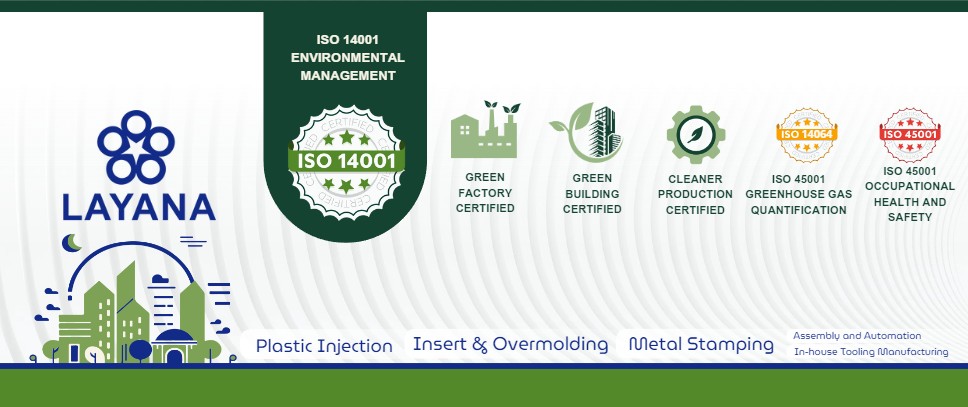
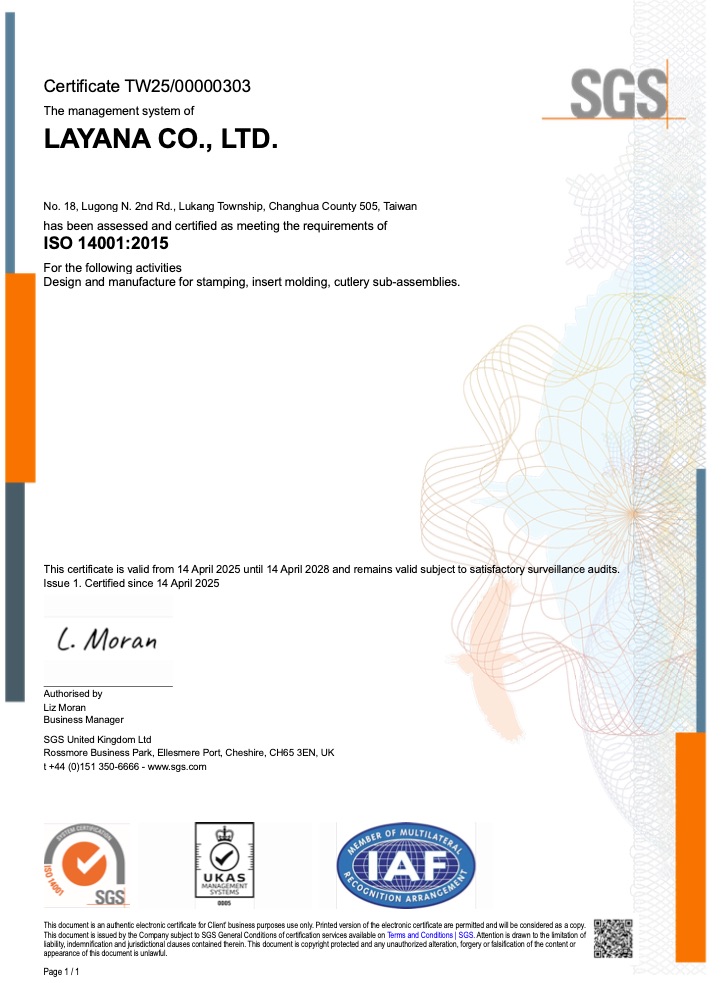
- Layana is ISO 14001 certified, paired with ISO 14064 (greenhouse gases) and ISO 45001 (occupational health & safety), plus Taiwan's Green Factory, Green Building (EEWH-Gold) and Cleaner Production certifications.
- For buyers, sourcing from an ISO 14001 partner means lower regulatory risk, a stronger eco-conscious brand, a smaller carbon footprint in finished products, and a more resilient supply chain.
- As one of the first companies in Changhua to achieve Green Factory standard, Layana uses ISO 14001 as the management backbone that ties every environmental initiative together.
What Is ISO 14001?
ISO 14001 is the globally accepted standard for designing and operating a robust Environmental Management System (EMS). It gives an organisation a clear, structured framework to identify, manage, monitor and address its environmental responsibilities — minimising ecological footprint while staying compliant with regulations.
Securing ISO 14001 certification demonstrates that a company's environmental management processes align with stringent international benchmarks. The standard is not a project; it is a system — one that the organisation is expected to operate and evolve over time.
Central to ISO 14001 is the Plan-Do-Check-Act (PDCA) cycle, which embeds a culture of continuous improvement. For Layana, this means consistently evaluating and refining sustainability initiatives to meet rising standards and exceed stakeholder expectations — not just on the day of the audit.
The PDCA Cycle — Plan · Do · Check · Act
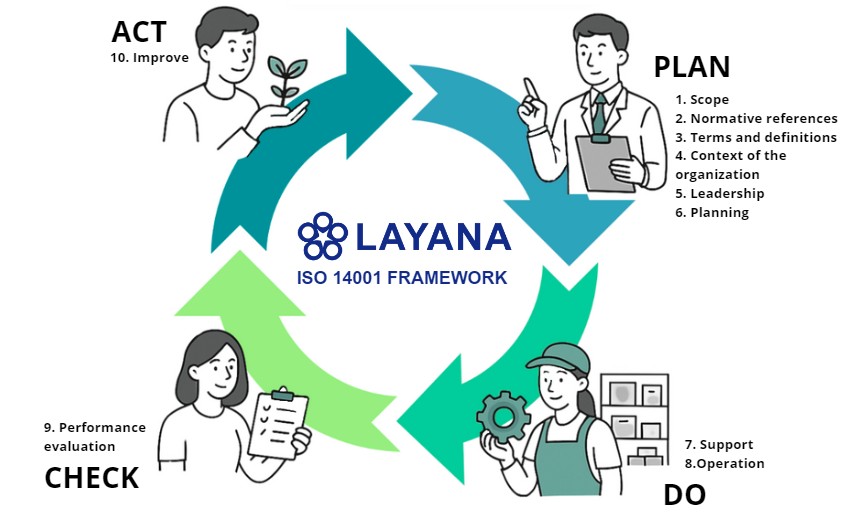
The four-stage Plan–Do–Check–Act loop is the operating logic of every ISO 14001 system. Together the four steps create a culture of continuous improvement, so each pass through the cycle leaves the company a little better than the last.
Plan
Scope, normative references and definitions. Understand the organisational context, establish leadership, and plan environmental objectives, risks and opportunities.
Do
Provide the resources, competence, awareness and communication needed (Support), and run day-to-day operational planning, control and emergency preparedness (Operation).
Check
Monitor and measure performance against the plan — internal audits, evaluation of compliance, and management review of the system.
Act
Address nonconformities, correct them, and drive continual improvement so the EMS gets demonstrably better with every cycle.
Layana's ISO 14001 Framework
Layana's certified EMS follows the PDCA cycle end-to-end. Below is how each phase translates into the specific clauses and activities the audit looks at.
| PDCA Phase | ISO 14001 Clauses Covered | What It Means at Layana |
|---|---|---|
| Plan | Scope · Normative references · Definitions · Organisational context · Leadership · Planning | Setting environmental objectives, mapping context (stakeholders, regulations), assigning executive ownership, and planning risks and opportunities. |
| Do | Support · Operation | Resourcing, competence and communication; running production with operational controls and emergency preparedness in place. |
| Check | Performance evaluation | Monitoring, internal audits, evaluation of compliance and a recurring management review of the EMS. |
| Act | Improvement | Correcting nonconformities, capturing lessons learned, and feeding improvements back into the next planning cycle. |
For Layana, ISO 14001 is not a trophy on the wall — it is a proactive promise to continuous improvement and a greener future for every stakeholder we work with.
Sustainable Manufacturing & Green Initiatives
Inside the ISO 14001 framework, Layana runs a portfolio of concrete initiatives that cut waste, conserve energy and curb pollution — and that integrate with our wider Cleaner Production, Green Factory and Green Building work.
Energy-efficient LED lighting
Full-factory LED replacement of traditional tubes — energy savings plus better illumination.
Heat-recovery systems
Insulation across equipment plus heat-recovery cuts consumption and stabilises factory temperature.
Production streamlining
Process and tooling improvements that minimise scrap and emissions per unit produced.
Carbon footprint monitoring
Tracking emissions from raw materials through manufacturing and transport — feeding our carbon emission label work.
Recycling discipline
Material recycling on the shop floor plus a paperless office and stationery recycling culture.
Water collection & recycling
Basement raft-foundation rainwater storage and recovery — see commercial rainwater collection system.
These initiatives dovetail with Layana's Cleaner Production programme, Green Factory status and Green Building certification — a holistic, eco-conscious manufacturing system reinforced by ISO 45001 for occupational health & safety and ISO 14064 for greenhouse-gas accounting.
Benefits for Clients & Partners
Sourcing from an ISO 14001 certified partner is not just a checkbox — it changes the buyer's brand, footprint and supply-chain resilience.
Enhanced Brand & Market Edge
Sourcing from a certified green leader boosts the buyer's own eco-friendly reputation, attracts sustainability-focused consumers and opens new markets — a competitive differentiator for both sides.
Lower Carbon Footprint
Products made with reduced energy and waste shrink the buyer's environmental impact, aligning with their sustainability goals and partner objectives.
Sustainable Collaboration
Layana's expertise in environmental best practices lets clients innovate on green solutions — a resilient, responsible supply chain that benefits every stakeholder.
Regulatory Resilience
Full compliance with strict environmental regulations minimises legal risk and shields the buyer's supply chain from disruption when rules tighten.
Cost Advantages
Disciplined energy, water and material use translates into stable operating costs — and stable costs translate into stable pricing for the buyer.
Continuous Improvement, Audited
The PDCA cycle is independently verified — buyers get evidence-backed assurance that environmental performance keeps improving, not just promises.
ISO 14001 vs Conventional Company
A category-by-category comparison of an ISO 14001 certified company (such as Layana) versus a conventional, non-certified one.
| Category | ISO 14001-Certified Company (e.g. Layana) | Conventional Company |
|---|---|---|
| Regulatory Compliance & Risk Management |
|
|
| Brand Strength & Market Position |
|
|
| Environmental Impact |
|
|
| Innovation & Sustainable Growth |
|
|
Layana's Wider ESG Certifications
ISO 14001 is the management backbone — but it sits inside a broader portfolio of certifications that together cover Layana's environmental, safety and production credentials.
ISO 14001
Environmental management systems — the framework on this page.
You are hereISO 14064
Greenhouse gas quantification, monitoring and reporting.
ISO 45001
Occupational health & safety management systems.
Green Factory
Taiwan's MOEA label — green building + cleaner production combined.
Green Building (EEWH-Gold)
EEWH-Gold certified factory (2018) — the hardware pillar.
Cleaner Production
General Industry Clean Production Assessment passed (2022).