Quality Control Circle — Where Frontline Insight Becomes Documented Improvement
Born in Japan in the 1960s and refined at Layana over 36 documented presentation cycles, the Quality Control Circle (QCC) is a team-based, bottom-up improvement methodology. Small cross-functional teams identify a quality issue, analyze it with structured QC tools, implement a solution, measure the result, and share the new standard — turning every operator's tacit knowledge into the kind of repeatable, auditable improvement that IATF 16949:2016 requires.
A Supplier With a Live QCC Program Is a Supplier That Gets Better Every Cycle
In automotive, EV, electronics and medical supply chains, the single best predictor of long-term supplier performance is not the first PPAP — it is the supplier's internal improvement rhythm. A QCC program is the visible, auditable evidence of that rhythm. Layana has run 36 QCC presentation cycles to date, with the most recent three (34th, 35th and 36th) delivered in 2025.
- Bottom-up improvement — operators surface issues management can't see
- Six structured steps — identify → data → develop → implement → evaluate → share
- Cross-functional teams — engineering, quality, production and tooling at the same table
- Silver Tower Prize — Layana's QCC program has earned external recognition
Key Takeaways
- QCC is a team-based, bottom-up quality improvement methodology that harnesses the creativity and operational know-how of frontline employees.
- It originated in 1960s Japan — driven by Toyota and other industrial leaders facing intense post-war competition.
- Every cycle follows the same six structured steps: identify the issue, gather data, develop solutions, implement, evaluate and share.
- Benefits span five areas: quality, employee engagement, problem resolution, operational efficiency and cross-functional collaboration.
- Applications reach far beyond manufacturing — into healthcare, education and services.
- At Layana, QCC is a live program with 36 documented presentations, including a Silver Tower Prize-recognized project.
Navigation Jump to a Section
The Origins of QCC
Quality Control Circles emerged from Japan's dynamic manufacturing sector in the 1960s — a period when Japanese industry faced fierce global competition and needed to elevate both production efficiency and product quality at speed.
Faced with that pressure, Japanese companies sought innovative ways to harness the expertise sitting on their own production floors. In this milieu, the concept of QCC emerged. Industrial leaders — most famously Toyota, along with other Japanese manufacturing giants — played pivotal roles in introducing and promoting QCC as a structured strategy for enhancing quality. The method spread rapidly through Japan in the 1970s, then to Korea, Taiwan and the rest of Asia, before crossing into Western automotive, aerospace and electronics manufacturers in the 1980s.
Today the same core idea — empower the people closest to the work to improve the work — is the bedrock of modern continuous-improvement frameworks, from Lean to Six Sigma to the IATF 16949:2016 automotive quality management standard. Layana has run QCC continuously as part of its quality culture for decades, with 36 internal presentation cycles documented to date.
What is a Quality Control Circle?
A Quality Control Circle is a team-based quality-improvement methodology founded on a single principle: the people doing the work usually know the work best. The methodology systematically harnesses the creative potential and tacit expertise of internal team members and turns it into documented, measurable improvement.
Inside the QCC framework, employees are empowered to take an active role in identifying and addressing quality issues in their own work area — rather than waiting for management to assign a fix. This shift fosters an environment that encourages collaboration, ownership and innovation, while still anchoring every project to a structured problem-solving cycle that produces auditable, repeatable results.
In a mature program — like Layana's, now in its 36th cycle — QCC is no longer a "project"; it is a habit of the organization. New operators expect to be on a circle. New issues are expected to surface a project. New standards are expected to come from the floor, not from a top-down directive.
The QCC Methodology — Small Teams, Big Diversity
The heart of the QCC methodology lies in the formation of small, cross-functional teams drawn from diverse departments and functions. This diversity is not decorative — it is the engine of the methodology.
When a circle is staffed with operators, line engineers, quality, tooling and sometimes purchasing or planning, the team brings a wide array of perspectives and professional knowledge to the same problem. A defect that looks like a "molding issue" from the press floor may turn out to be a tool-wear issue, a moisture-control issue or a purchasing-spec issue — and only a mixed team will reliably catch that.
From there, the team embarks on a defined journey: it identifies a quality issue that requires improvement, then through structured brainstorming and extensive discussions collaboratively devises candidate solutions. The most promising solution is implemented with continuous monitoring to verify feasibility and effectiveness, and the results — whether positive or null — are documented and shared.
At Layana, this rhythm is plugged directly into the IATF 16949:2016 quality management system — so a successful QCC project doesn't just produce a slide deck, it produces an updated control plan, an updated PFMEA risk score and an updated work instruction. The improvement becomes part of the documented system.
The Six Steps of Every QCC Cycle
The methodology is only as good as the discipline of executing it. Every Layana QCC project follows the same six-step cycle — taught, repeated and audited.
Identify the Issue
The team pinpoints a specific quality issue — typically a defect, scrap, rework or process-instability pattern associated with a product or production step — and writes a clear problem statement.
Gather Data
Pertinent data is collected and analyzed using structured QC tools — Pareto charts, fishbone diagrams, check-sheets, control charts — to characterize the problem, quantify its impact and isolate its likely root causes.
Develop Solutions
The cross-functional team brainstorms multiple corrective options, evaluates each for feasibility, risk and cost, and selects the most suitable solution — or a combination — to take into a controlled trial.
Implement Improvements
The chosen solution is rolled out under controlled conditions on one line, one shift or one tool first. Process indicators are tracked in real time and adjustments are made before scaling.
Evaluate Results
Post-implementation data is compared to the baseline to confirm the improvement is real, the gain holds and no unintended side-effects appear elsewhere in the process. Failed trials are documented just as carefully as wins.
Share Experiences
Findings, methods and the new standardized work are presented to other teams and incorporated into the documented control plan — turning a one-off win into organizational knowledge and the next team's starting point.
The Five Benefits QCC Delivers
QCC isn't kept on the calendar because it is fashionable — it is kept because it consistently produces measurable gains across five distinct dimensions of the business.
Quality Enhancement
Through continuous improvement, QCC raises the quality of both products and processes — feeding directly into higher customer satisfaction.
Employee Engagement
QCC actively involves operators and engineers in shaping their own work — bolstering ownership, belonging and retention.
Problem Resolution
QCC teams tackle real, existing issues at root-cause level — driving fewer defects, fewer errors and fewer repeat escapes.
Efficiency Improvement
Processes are streamlined, waste is reduced and redundant work is eliminated — raising throughput without raising headcount.
Team Collaboration
Cross-departmental teamwork breaks down information silos — the conversation that happens during a circle is often the deliverable.
QCC Is Not Just for Manufacturing
QCC was born in manufacturing, but the methodology is industry-agnostic. Anywhere a process produces an output that can be measured, QCC can be applied. Regardless of an organization's scale or nature, the same six-step cycle adapts to its specific circumstances.
Manufacturing
Defect reduction, scrap reduction, cycle-time improvement and PPAP-related corrective action.
Services
Customer-facing process improvement, ticket-resolution speed, complaint-handling and SLA adherence.
Healthcare
Patient-care workflow, medication-error reduction, wait-time improvement and clinical-quality standards.
Education
Administrative-process streamlining, enrollment workflow, student-experience improvement and institutional quality.
What QCC Looks Like in the Real World
Three illustrative deployments — one from each of the three sectors where QCC adoption is most documented.
Automotive Manufacturing
In an automotive manufacturing facility, QCC teams systematically identified and addressed issues tied to product defects — reducing recalls, lowering warranty exposure and raising customer satisfaction. Layana operates in this same context every day, with QCC plugged directly into its IATF 16949 quality system.
Hospitals & Clinics
Hospitals and healthcare institutions use QCC to enhance patient-care processes — reducing medication and handover errors, smoothing intake workflow and lifting overall clinical-quality metrics. The six-step cycle adapts cleanly from a stamping line to a nursing ward.
Schools & Universities
In education, QCC is used to streamline administrative processes — enrollment, scheduling, document workflow — which lifts both operational efficiency and the day-to-day student experience. Same toolkit, different output.
Our QCC Presentations in 2025
Three QCC project cycles were presented internally at Layana in 2025 — the 34th, 35th and 36th in an unbroken chain of documented improvement.
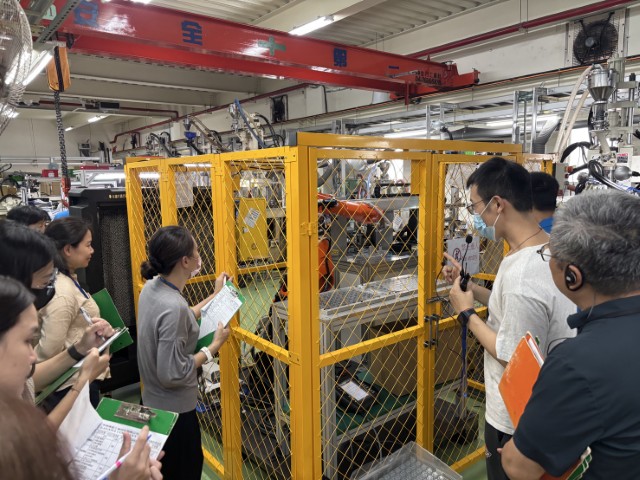
The 34th QCC Presentation
Cross-functional team project documented and presented as part of Layana's 2025 continuous-improvement cycle.
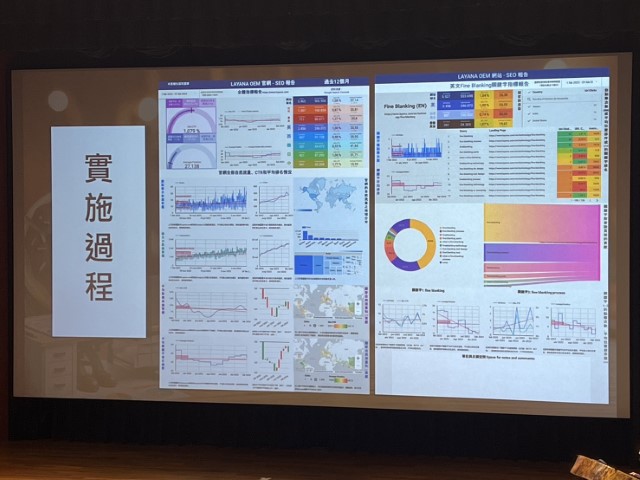
The 35th QCC Presentation
Continuation of the 2025 improvement cycle — another cross-functional QCC project taken from problem statement to standard work.
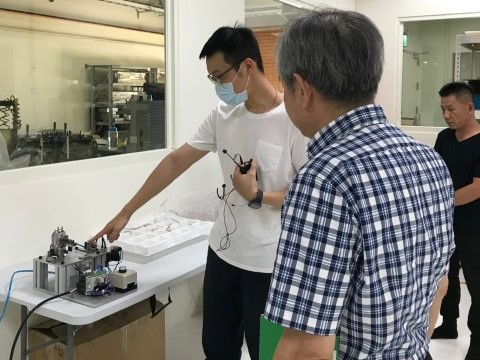
The 36th QCC Presentation
The most recent QCC cycle at Layana — the 36th consecutive documented improvement project since the program began.
Silver Tower Prize — awarded to a Layana QCC project
One of Layana's QCC cycles has been externally recognized with the Silver Tower Prize — independent validation that the program produces real, measurable improvement, not just internal slide decks.
Read More About Our Past QCC Presentations
Use the site search to browse every indexed QCC presentation, event page and related quality article from one results page.
QCC Is the Habit, Not the Project
Quality Control Circles represent a powerful methodology for any organization seeking to enhance products, processes and services — but the methodology itself is the easy part. The hard part is keeping the rhythm. A single QCC project is a slide deck; 36 consecutive cycles is an organizational habit.
The success of QCC lies not just in its technical aspects but in its ability to empower employees and harness their creativity — propelling the organization toward sustained, repeatable improvement. With the ever-increasing focus on quality in today's competitive markets, QCC remains a valuable tool for organizations striving to meet — and exceed — customer expectations.
At Layana, the program will continue to operate cycle after cycle, plugged into the IATF 16949:2016 quality management system, fed by frontline insight, and audited by the same documentation standard that governs every other quality decision in the company.
"Empower the people closest to the work to improve the work."
— The QCC principle, lived at Layana for 36 cyclesFrequently Asked Questions about Quality Control Circle
A Quality Control Circle is a small, cross-functional team of employees who voluntarily meet to identify, analyze and resolve quality, productivity or workplace issues in their own work area. Born in 1960s Japan, QCC harnesses the tacit knowledge of operators and frontline staff and turns it into documented, measurable improvement using structured QC tools and a six-step problem-solving cycle.
QCC originated in 1960s Japan within the country's manufacturing sector. Japanese industrial leaders — including Toyota — adopted and promoted the methodology as a way to elevate production efficiency and product quality. It later spread globally and is now used across automotive, electronics, healthcare, education and service industries.
1) Identify the issue. 2) Gather data and analyze it with QC tools (Pareto, fishbone, check-sheets, control charts). 3) Develop and select solutions. 4) Implement improvements under controlled conditions. 5) Evaluate results against the baseline. 6) Share experiences and standardize the new working method across other teams.
QCC delivers five primary benefits: improved product and process quality, higher employee engagement and ownership, faster and more durable problem resolution, better operational efficiency through waste reduction, and stronger cross-departmental collaboration that breaks down information silos.
Layana has run 36 documented QCC presentation cycles to date. The 34th, 35th and 36th presentations were held in 2025; the 1st through 33rd are archived and indexed in groups of 1st–16th, 17th–30th and 31st–33rd. Selected projects have been externally recognized — most notably with the Silver Tower Prize for quality improvement.
No. While QCC has its strongest history in automotive and electronics manufacturing, the same six-step problem-solving cycle is now applied in healthcare (reducing medical errors and improving patient care processes), education (streamlining administrative workflow and student experience) and service industries (customer-facing process improvement).
QCC is one of the operational ways Layana satisfies the IATF 16949:2016 requirement for continuous improvement. The cycle's outputs — root-cause analyses, updated control plans, revised PFMEA scores, new standard work — feed directly into the QMS documentation. QCC and Six Sigma are complementary: QCC handles smaller, faster, frontline-driven projects, while Six Sigma DMAIC handles larger, data-heavy, statistically-driven projects.