AI-Powered Autonomous Mobile Robot
Lovebot AMR: how Layana automated inspection-part delivery
In 2022, Layana introduced Lovebot autonomous mobile robots to the production floor — RGBD depth-camera navigation, 3D obstacle avoidance, 30 kg payload and a multi-purpose platform that doubles as LED signage. The result: less manual carrying, safer workers, and an Industry 4.0-ready intralogistics layer.
Navigation Jump to a Section
Key Takeaways
- Autonomous, not pre-pathed — Lovebot plans its own routes; no magnetic strips or fixed wires required.
- RGBD depth-camera navigation — real-time mapping, geotagging and 3D obstacle avoidance, even in 55 cm-wide passages.
- 30 kg cooperative payload — with a detachable tray sized to the inspection parts being moved.
- Multi-purpose platform — LED signage, AI voice control, smart routing and automatic charging built in.
- Safer, more efficient operations — automating QA delivery reduces lifting risk and frees operators for higher-value work.
What Is an Autonomous Mobile Robot?
An Autonomous Mobile Robot (AMR) is any robot that can understand and move through its environment without direct operator oversight and without following a fixed, predetermined path. The Autonomous Mobile management platform provides autonomous delivery to specified fields — saving labor and increasing work efficiency more effectively than traditional AGVs that depend on magnetic strips or wires.
In a warehouse and distribution-center environment, AMR technologies integrate with the host control system, allowing the robots to create their own routes between locations within a warehouse or facility. The robot can deliver to fixed locations at fixed times, or on demand, and connect over Wi-Fi, Bluetooth, AIoT or web services — opening up remote-control workflows that scale with the operation.
The AMR equipment introduced by Layana can cooperatively carry goods weighing up to 30 kg, assisting and reducing complicated, repetitive manual work in an automated manner. Combined with Layana's custom automation and component assembly capabilities, it forms a connected smart-factory layer rather than a standalone gadget.
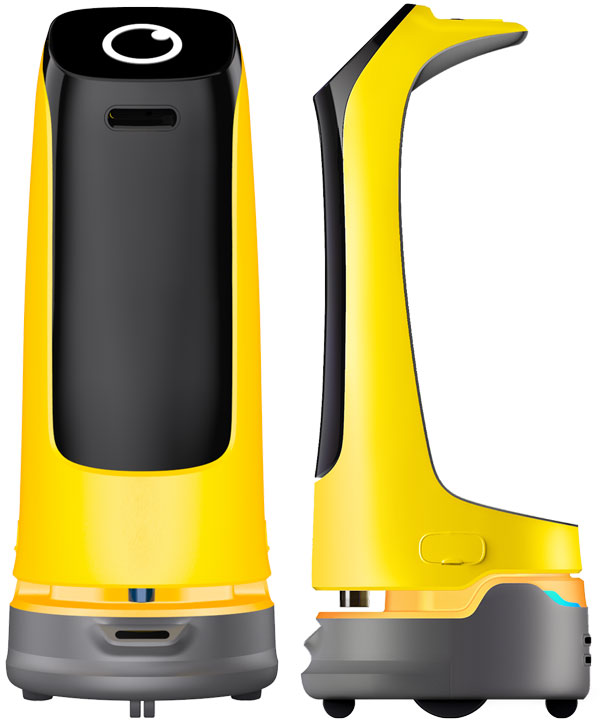
Autonomous control and improved efficiency — the AMR is not just a delivery robot, it is the first connected layer of an Industry 4.0 intralogistics system.
Positioning & Navigation
Lovebot uses an RGBD depth camera for self-identified map surveying, smart route planning, accurate geotagging, and real-time analysis of the surrounding environment — turning raw sensor data into routes that avoid obstacles without operator intervention.
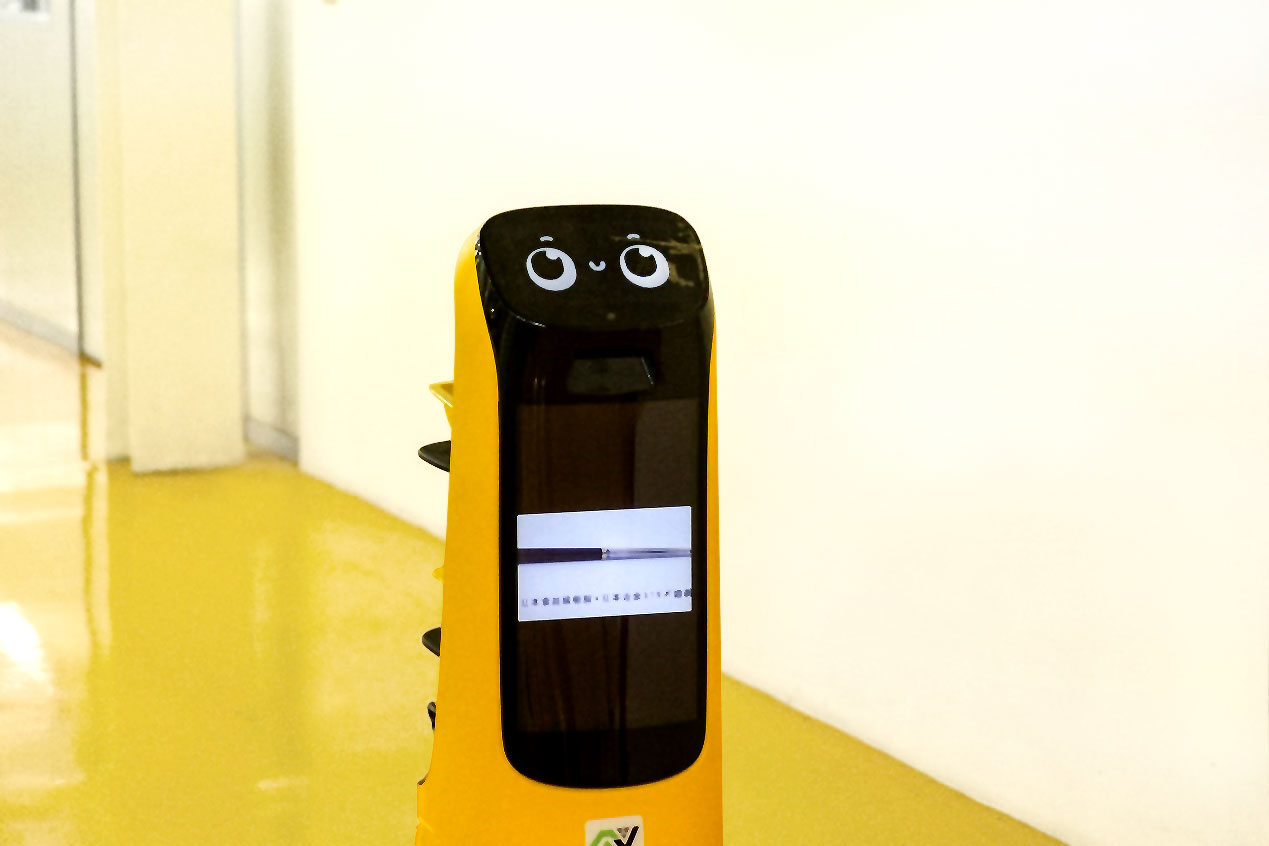
The platform uses AMR sensing and an RGBD depth camera for self-identified map surveying, smart route planning, accurate geotagging, and real-time analysis of the site environment — calculating complex data to avoid barriers easily and deliver fully autonomous navigation.
It detects traffic or anything that has blocked its pathway. The robot communicates and moves out of the way, makes adjustments, or comes to a complete stop to allow the other foot traffic to continue on — the kind of dynamic behavior a fixed-path AGV simply cannot replicate.
RGBD Depth-Camera Mapping
Onboard cameras build a live 3D map of the floor. The robot understands not just where walls are, but how far obstacles project — critical for narrow-aisle navigation.
Smart Route Planning
The platform calculates the most efficient path between origin and destination, adapting as the environment changes shift to shift.
Real-Time Obstacle Avoidance
Detects pedestrians, forklifts and unplanned blockages. The robot moves out of the way, makes adjustments, or stops to let foot traffic pass.
Accurate Geotagging
Every delivery is logged against a precise location — a foundation for traceability, MES integration and continuous improvement.
Lovebot — Six Built-In Features
A multi-purpose device — LED electronic signage + material delivery on the same chassis. Lovebot is not a single-function delivery robot: the same platform serves as digital signage, takes AI voice commands, navigates in 3D, delivers materials, charges itself and plans smart routes.
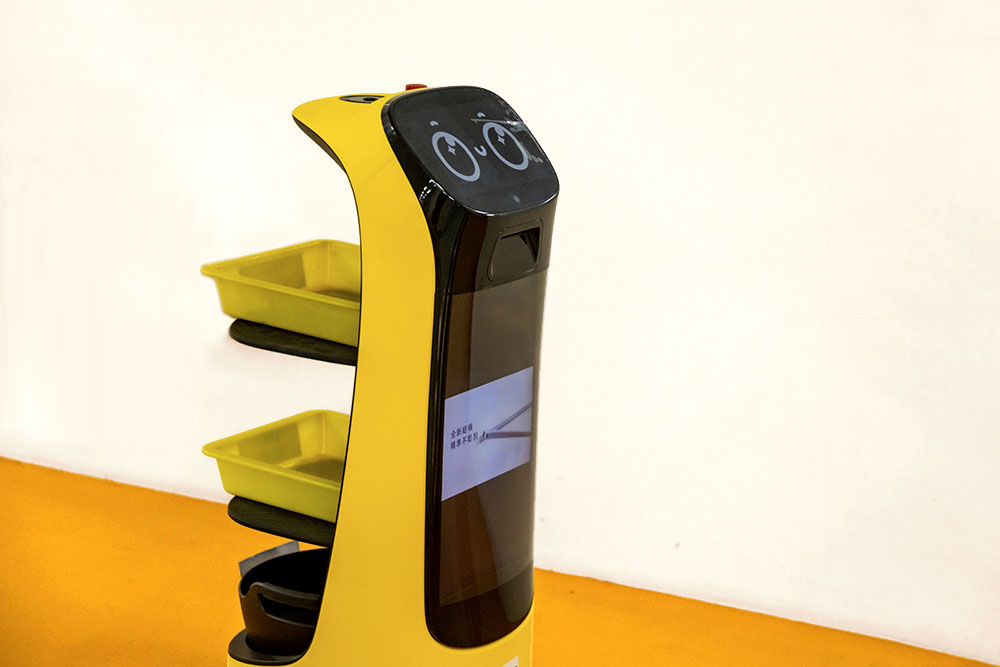
Layana's Lovebot is equipped with a detachable tray that can be adjusted according to the size of the inspection parts being moved — the same robot supports multiple part families without re-engineering the fixture.
Combined with the six built-in features below — signage, voice, 3D detection, delivery, auto-charging and smart routing — Lovebot becomes a single, connected piece of factory infrastructure instead of six separate tools.
LED Electronic Signage
Onboard display turns the robot into mobile signage — wayfinding, safety alerts or production notices wherever it goes.
AI Voice Control
Natural-language commands dispatch the robot, change destinations or pause delivery — no console required for routine tasks.
3D Obstacle Detection
RGBD depth camera analyzes the scene in three dimensions, avoiding obstacles caused by personnel and equipment in real time.
Material Delivery
Detachable tray sized to the part being carried — up to 30 kg cooperatively, from production line to QA station automatically.
Automatic Charging
When battery runs low, Lovebot returns to its dock and resumes routes once charged — no manual handling required.
Smart Route Planning
Algorithms select the most efficient route between any two locations, learning from traffic patterns to keep the fleet flowing.
Benefits for Manufacturers
Compared to manual operation or a traditionally automated environment, AMRs improve the efficiency of logistics and supply-chain operations of all sizes — measurably and in ways that compound month over month.
Efficiency & Scalability
Deliver to fixed locations on schedule, or on demand. AMR fleets scale by adding units, not by re-laying floor markings.
Safer Workplace
Removes manual carrying from mixed-traffic aisles. The robot stops or re-routes for pedestrians — measurably lower collision and lifting risk.
Higher Productivity
Operators spend their time on value-adding work, not walking parts between departments. Throughput rises without a head-count increase.
Connected by Default
Wi-Fi, Bluetooth, AIoT and web services let Lovebot plug into MES, ERP and dashboards — the foundation for true Industry 4.0 operations.
Application Fields
AMR architectures transfer across any environment that combines repetitive material movement with mixed human/automation traffic — eight common categories below.
Factory Parks
Interdepartmental delivery on the production floor and across multi-building campuses.
Warehouses
Picking support, replenishment and order-to-staging movement in distribution centers.
Airports
Baggage handling support, supplies delivery and contactless terminal services.
Restaurants
Food running, dish bussing and front-of-house guest experiences with built-in signage.
Schools
Mail and supply delivery between buildings, plus interactive on-campus signage.
Shopping Malls
Wayfinding signage, parcel transport between stores, and customer assistance.
Medical Institutions
Contactless transport of specimens, medication and small supplies between units.
Retail Stores
Stock replenishment from back room to floor, plus promotional signage on the move.
Lovebot at Layana — Automated Inspection-Part Delivery
In 2022, Layana introduced Lovebot AMRs to automate the transport of inspection parts inside the production area. The deployment is now a foundational piece of our smart-factory roadmap.
Lovebot is deployed in the production area to move small interdepartmental items — particularly inspection parts traveling from the line to the quality-assurance department. The robot is compact and equipped with an RGBD depth camera that automatically avoids obstacles, even in 55 cm-wide passages where larger AGVs simply cannot fit.
While moving across the floor, the robot uses 3D detection and automatic obstacle avoidance to react to personnel in real time. The mobile chassis carries a detachable tray that can be sized to the inspection parts being transported — so the same robot supports multiple part families without re-engineering.
Layana has used the automated material-delivery function of Lovebot to transport inspected parts from the production tray to the QA department, replacing manual delivery. Because the inspected items are generally small, there is no risk of parts falling off in transit — and the operator who used to walk that route is now free for higher-value tasks.
Year introduced — 2022.
Use case — automated transport of inspection parts from production to QA.
Operational impact — reduced manual carrying, lower worker-safety risk, higher quality and efficiency.
Next step — extending automation from Lovebot to automated storage and connected MES systems.
Lovebot AMR — Specifications
Indicative specifications for Layana's Lovebot AMR deployment — every project is configured to the customer's floor plan, payload mix and integration target.
| Parameter | Specification | Notes |
|---|---|---|
| PayloadCooperative transport | Up to 30 kg | Detachable tray sized to the part family being moved |
| NavigationSensing | RGBD depth camera | Self-identified map surveying with smart route planning and geotagging |
| Obstacle AvoidanceReal-time | 3D detection | Reacts to personnel and equipment; stops, re-routes or adjusts as needed |
| Min. Passage WidthNarrow-aisle capable | 55 cm | Fits production layouts where AGVs and larger AMRs cannot |
| ChargingEnergy | Automatic dock-and-charge | Returns to charging station when battery is low — no operator intervention |
| DisplayOnboard | LED electronic signage | Wayfinding, safety alerts, production notices — mobile signage layer |
| Voice InteractionOperator UX | AI voice control | Dispatch, redirect and pause via natural-language commands |
| ConnectivityIntegration | Wi-Fi · Bluetooth · AIoT · Web | Plugs into MES, ERP and dashboards for remote control and traceability |
Why Layana for AMR & Smart-Factory Projects
Lovebot is part of a deliberate strategy at Layana: introduce automation systems and equipment that progressively reduce operational risk while improving quality and efficiency — from AMRs to automated storage, AOI inspection and custom production lines.
Layana is an automotive supplier with decades of experience in precision metal stamping and injection molding. We deploy automation on our own production floor before recommending it to customers — so when we integrate an AMR like Lovebot, we know what works in real shift conditions, not in a demo.
Our in-house custom automation team designs and integrates AMR fleets, AOI inspection cells, automated storage and connected MES layers — the elements of a true smart factory rather than a one-off pilot. Because we engineer, deploy and operate the same equipment we sell, we shorten your learning curve.
Technology and innovation are core to where we focus going forward. Whether you are scaling an existing line or starting a greenfield smart-factory program, Layana brings IATF 16949-grade discipline and one-roof accountability to every step.
Battle-tested deployments — every recommendation comes from our own floor.
Connected automation — AMR, AOI, automation and assembly engineered together.
IATF 16949 quality system — automotive-grade rigor across the operation.
Long-term partnership — scalable capacity that grows with your roadmap.