Safety Product Management
& the Volvo Safety Management Audit
Safety is the fundamental principle behind every engineering decision in the automotive industry. Layana manages safety-critical parts under IATF 16949 and the Volvo Safety Management Audit (SMA) — a disciplined 5-step framework applied from raw-material receipt through final delivery.
Navigation Jump to a Section
Key Takeaways
- Safety parts are components with critical characteristics — if those characteristics change, the safety of an entire vehicle system or its occupants can be compromised.
- All safety parts must be managed under IATF 16949 and client-specific requirements, with documented control plans and PFMEA developed from the earliest design stage.
- Layana follows a 5-step safety management framework — consistent training, regular audits, control plans & PFMEA, SIP/SOP documentation, and equipment maintenance.
- The Volvo Safety Management Audit (SMA) is an external audit that independently verifies a supplier can manage safety parts end-to-end — from storing raw materials to customer delivery.
- Layana produces Volvo safety-critical components including body sensors, lever arms, pinions, housings and spring supports — all under SMA-compliant management.
What Are Safety Parts?
As an automotive supply chain manufacturer, every component Layana produces — from precision micro parts to mechanical assemblies — is governed by data management and international standard procedures such as IATF 16949. For a specific subset of these components, the requirements go considerably further: they are safety parts, and they demand a different level of discipline.
"Safety is, and must always be, the basic principle for all engineering design."
— Assar Gabrielsson & Gustaf Larson, Volvo Founders, 1927Safety parts are components whose critical characteristics — if changed or found out of specification — can affect other automotive parts or the entire vehicle. A brake pedal is a widely recognized example: if its critical characteristics deviate, braking performance is compromised and occupant safety is directly at risk.
Because the stakes are so high, safety parts go through a management process that is fundamentally distinct from standard production parts. This process starts before a single tool is cut — with early client discussion, risk analysis and control plan development — and continues through every stage of production, from raw material storage to final delivery.
Safety part suppliers are typically subject to external audits that assess both the presence of an appropriate management system and the capability to sustain it reliably over time. At Layana, this includes annual IATF 16949 recertification audits and client-specific audits such as the Volvo Safety Management Audit.
Critical Characteristics — Why They Matter
A critical characteristic is any property of a part or process whose variation beyond specified limits has a significant effect on product safety. Identifying and controlling these characteristics from the very start of a program is the engineering foundation of safety parts management.
Critical characteristics can apply to a dimension, a material property, a surface condition or an assembly torque — anything that, if wrong, could produce a part that behaves unexpectedly under load or in a crash event. In automotive safety engineering, a single missed critical characteristic can cascade into a system-level failure.
For this reason, control plans and Potential Failure Mode and Effects Analysis (PFMEA) are developed against the technical drawing of every safety part. The earlier this analysis is conducted — ideally during the DFM stage before the design is confirmed — the lower the cost of corrections. A change during concept costs a fraction of a change after tooling is committed.
Layana's approach is to initiate this review with clients as early as possible: aligning on critical characteristics, tolerances and inspection criteria together, then building those requirements into the control plan before mass production begins.
Management system — whether documented procedures for safety parts exist and are followed at every production stage.
PFMEA & control plans — whether risk analysis is current, traceable to the latest drawing revision and acted upon.
SIP & SOP compliance — whether standard procedures are applied consistently across all operators and shifts.
Equipment calibration — whether production and measurement hardware is maintained on a documented schedule.
Employee competence — whether personnel working on safety parts are trained and records are kept.
Layana's 5-Step Safety Management Framework
Managing safety parts is not a single event — it is a continuous, discipline-driven system. Whether qualifying as a new safety parts supplier or sustaining an existing program, Layana follows five structured practices throughout every program's lifetime.
The competence of safety parts management is just as important as the secure feeling you have whilst driving on a highway — the goal is to prevent accidents from happening, and when they do happen, to minimize the consequences for drivers and others on the road.
The Volvo Safety Management Audit
The Volvo SMA is a client-specific external audit that independently verifies a supplier has both the management system and the technical capability to manage safety-critical parts throughout the entire production value stream — from receiving raw materials to delivering finished goods.
Unlike a standard quality audit, the SMA focuses specifically on safety part management practices — how the supplier identifies critical characteristics, how those are controlled during production, how deviations are detected and escalated, and how the system sustains itself as the organization and products evolve.
Passing the SMA is a prerequisite for supplying safety parts to Volvo. It is not a one-time qualification: the audit is conducted regularly to confirm that procedures remain in place and are genuinely followed — not just documented on paper.
At Layana, the SMA is integrated into our annual audit cycle alongside IATF 16949 recertification. Every finding — whether from an internal review or an external audit — becomes an input into our continuous improvement loop, closing gaps before the next audit cycle and strengthening our system over time.
Management system — verified evidence that safety parts are treated differently from standard parts at every stage of production.
Training records — documented proof that operators and engineers are trained on safety part requirements and competency is maintained.
PFMEA & control plans — current revision, traceable to the latest drawing and signed off by the appropriate engineering authority.
SIP/SOP adherence — shop-floor verification that procedures are actually followed, not only written down.
Equipment records — calibration and maintenance logs for all tooling and measurement gauges used on safety parts.
What the SMA Framework Delivers
Documented Management System
Safety part procedures are documented, version-controlled and traceable — available for client or third-party audit at any point in the product life cycle.
Annual Employee Training
Every employee involved in safety part production completes annual internal training — records are maintained and presented during every SMA audit cycle.
PFMEA & Risk Control
Potential failure modes are identified early, risk-ranked by severity and detectability, and translated into specific control plan actions before mass production starts.
SIP & SOP on the Floor
Standard procedures are active at each workstation and verified in practice — the SMA auditor confirms floor-level compliance, not just document existence.
Equipment Calibration
All production and measurement equipment used for safety parts follows a documented maintenance schedule to prevent calibration drift and specification escape.
Continuous Improvement Loop
Each audit finding — internal or external — feeds directly into corrective and preventive action, making the management system progressively stronger with every cycle.
Volvo Safety Parts — What Layana Produces
Layana manufactures a range of safety-critical components for Volvo under the SMA-compliant management framework. Each part is produced through our integrated stamping, molding and assembly capabilities, with full documentation and traceability from raw material to delivery.
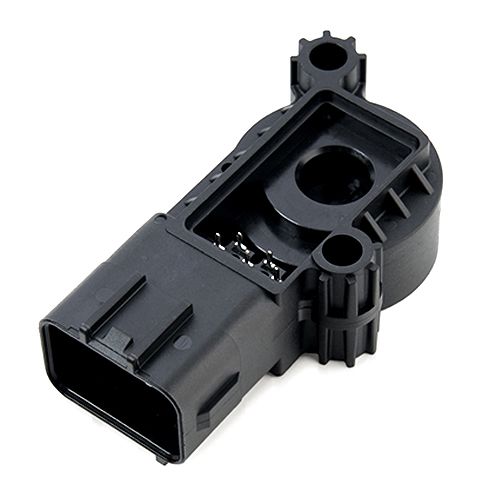
Body Sensor
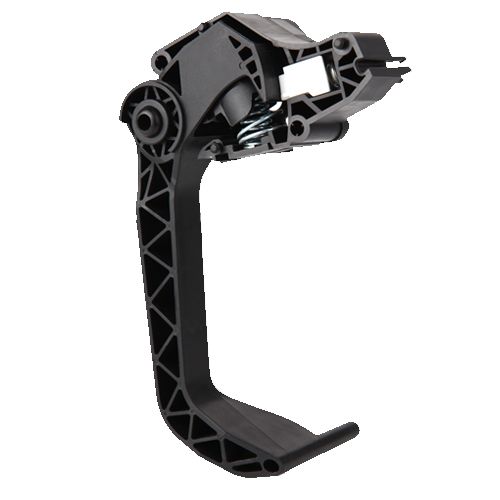
Lever Arm
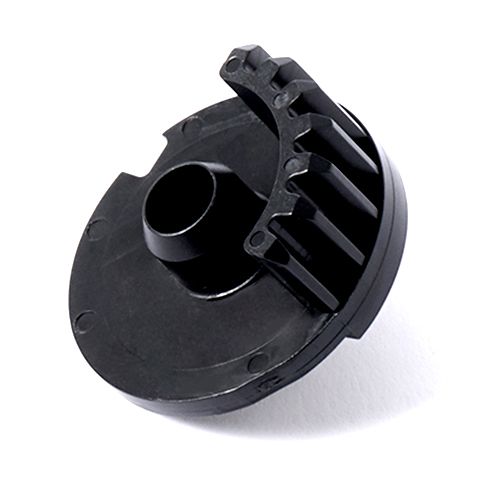
Pinion
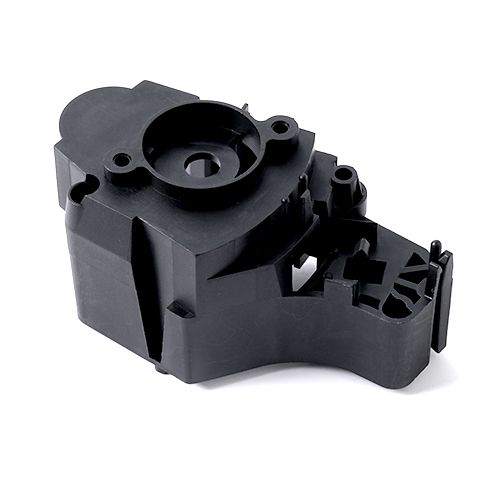
Housing
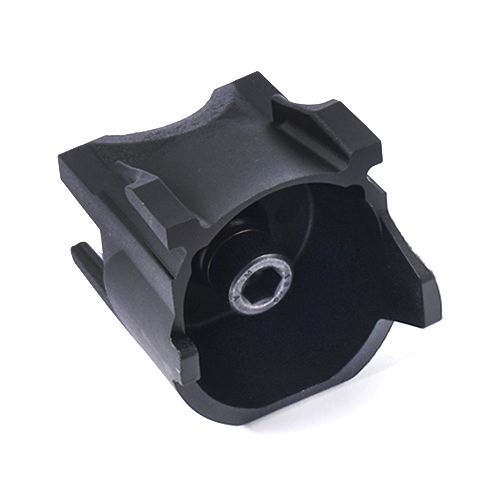
Spring Support
The common thread across all these parts is that their critical characteristics — whether dimensional, mechanical or material — are identified at the program's start, actively controlled throughout production and verified before delivery. This is what the SMA framework is designed to guarantee, and what Layana delivers on every production run.
Beyond Volvo, Layana's safety part management approach is transferable to any OEM that requires safety-critical supply chain compliance — automotive, biking, aerospace or medical — wherever a component's failure mode could have consequences for the people who depend on it.