Training Programs — Education That Funds Itself in Quality
At Layana, training is not an HR programme — it is the manufacturing programme. A defined percentage of annual revenue funds routine in-house Six Sigma, IATF 16949, Quality Circles and TPS consultant programs, the five IATF 16949 core tools are taught to every relevant engineer, and any employee earning a college degree or professional certification receives an automatic salary raise. The result: a workforce of trained problem-solvers, and a recognised culture of continuous improvement.
Source From a Manufacturer Where Training Is a Budget Line
When a supplier treats training as overhead, it shows on the floor — drift in SPC, fuzzy MSA, late PPAP, repeat defects. When training is a fixed share of revenue, the opposite happens: methodology stays sharp, problems get fixed at the root, and small improvements compound year after year. That is the standard customers receive from Layana.
- Training funded by a fixed % of annual revenue — never the first thing cut
- All five IATF 16949 core tools taught in-house — SPC, MSA, FMEA, APQP, PPAP
- Salary raise + monetary reward for every college degree or pro certification
- Externally recognised — Happy Enterprise 3 Star, TTQS & Molex Best in Class
Key Takeaways
- Layana funds employee training as a fixed percentage of annual revenue — a structurally funded part of the business, not a discretionary line.
- Routine in-house programs cover Six Sigma, IATF 16949, Quality Control Circles and Toyota Production System (TPS) consultant programs, with small-group education in every department.
- The five IATF 16949 core tools — SPC, MSA, FMEA, APQP, PPAP — are the shared language of quality across the workforce.
- Employees are encouraged to study at domestic universities or abroad; college degrees and professional certifications earn an automatic salary raise and monetary rewards.
- Outside recognitions back the programme — Happy Enterprise 3 Star (2016), Molex Best in Class (2016), Taiwan Continuous Improvement Award (2015), Silver Tower Prize (2015) and TTQS (2012).
- Daily practice rests on 5 Whys, 5S, TQM/TPM/TPS and Lean Six Sigma — and the working philosophy: "we want to be better than better."
Navigation Jump to a Section
Education & Training at Layana
Layana believes in empowering its employees through lifetime learning. Training is not an HR programme bolted onto manufacturing — it is the manufacturing programme.
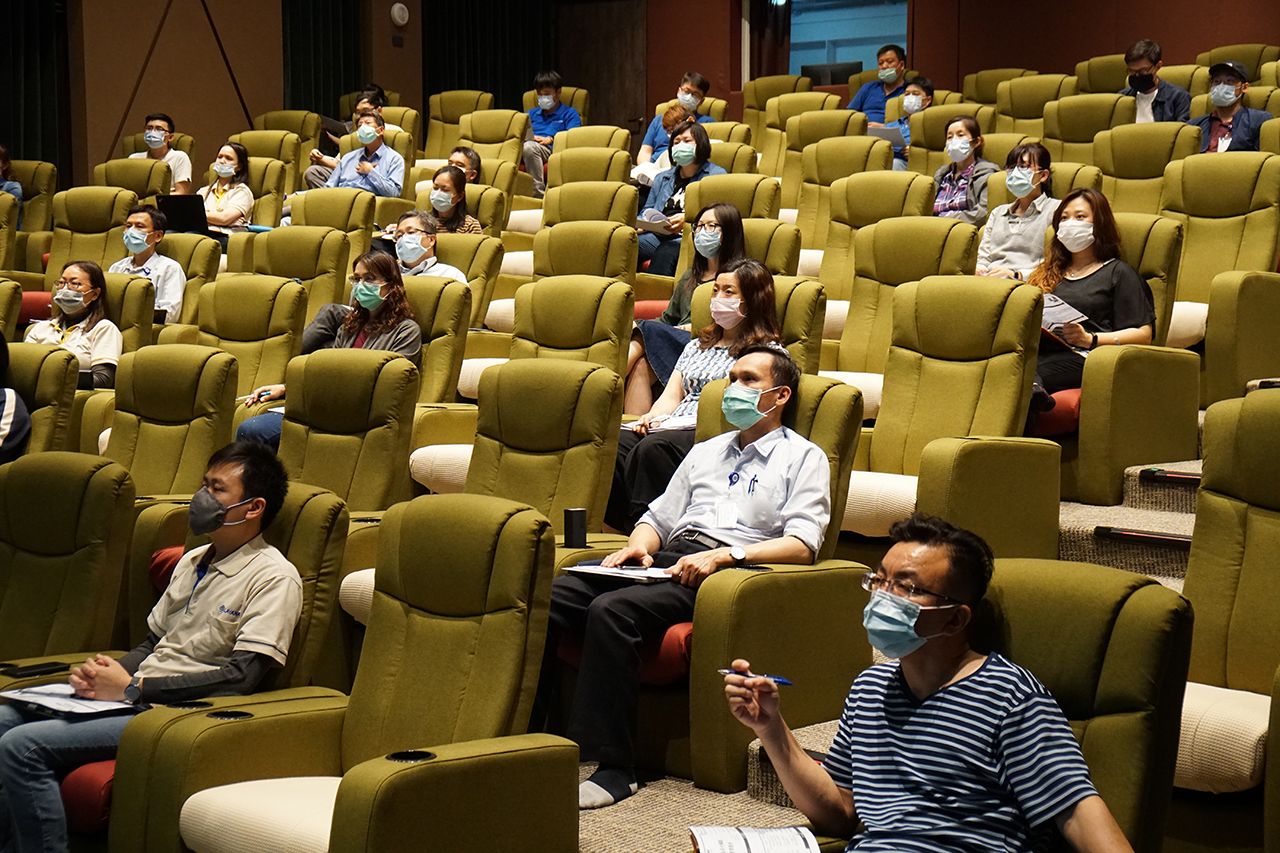
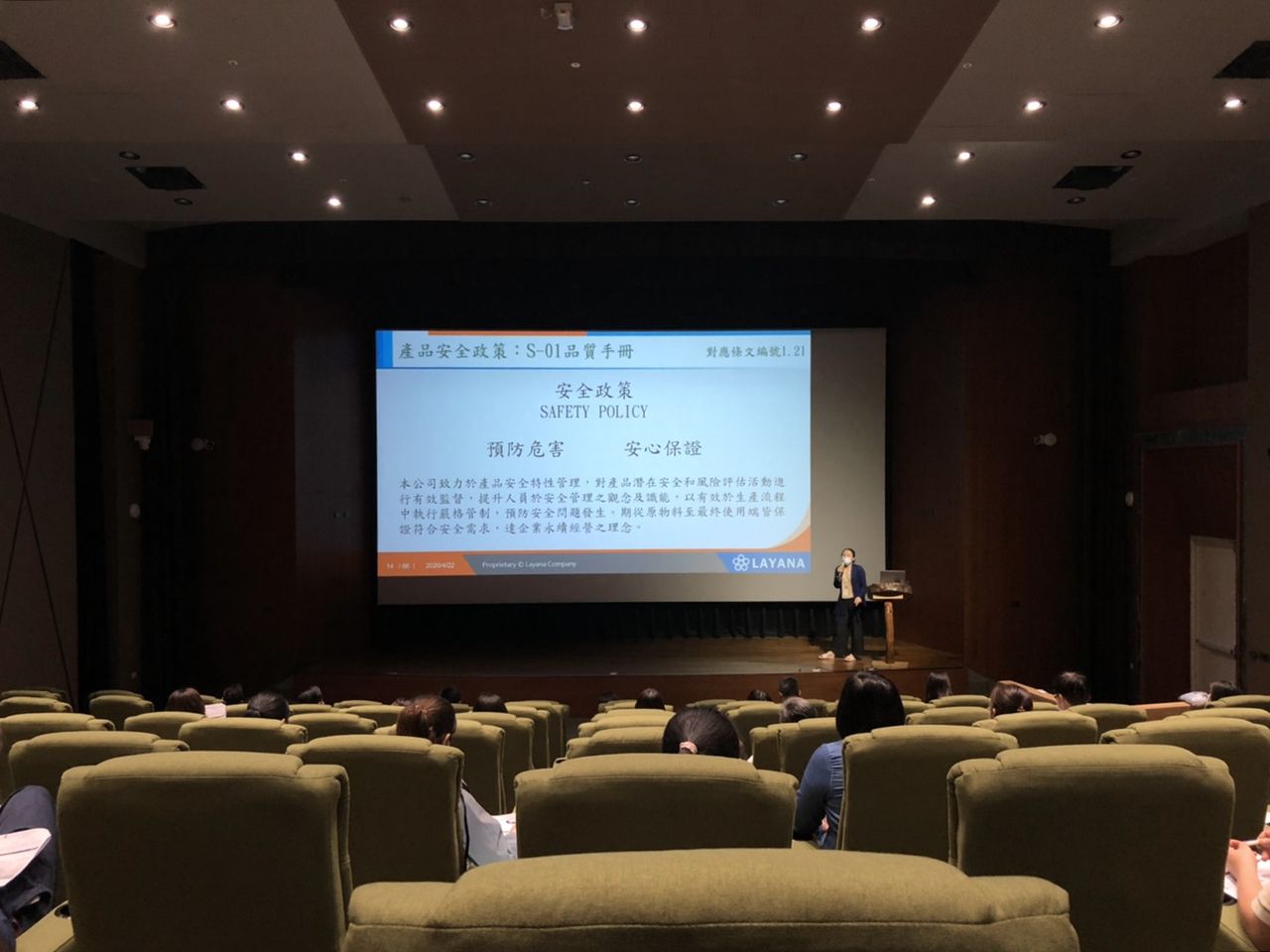
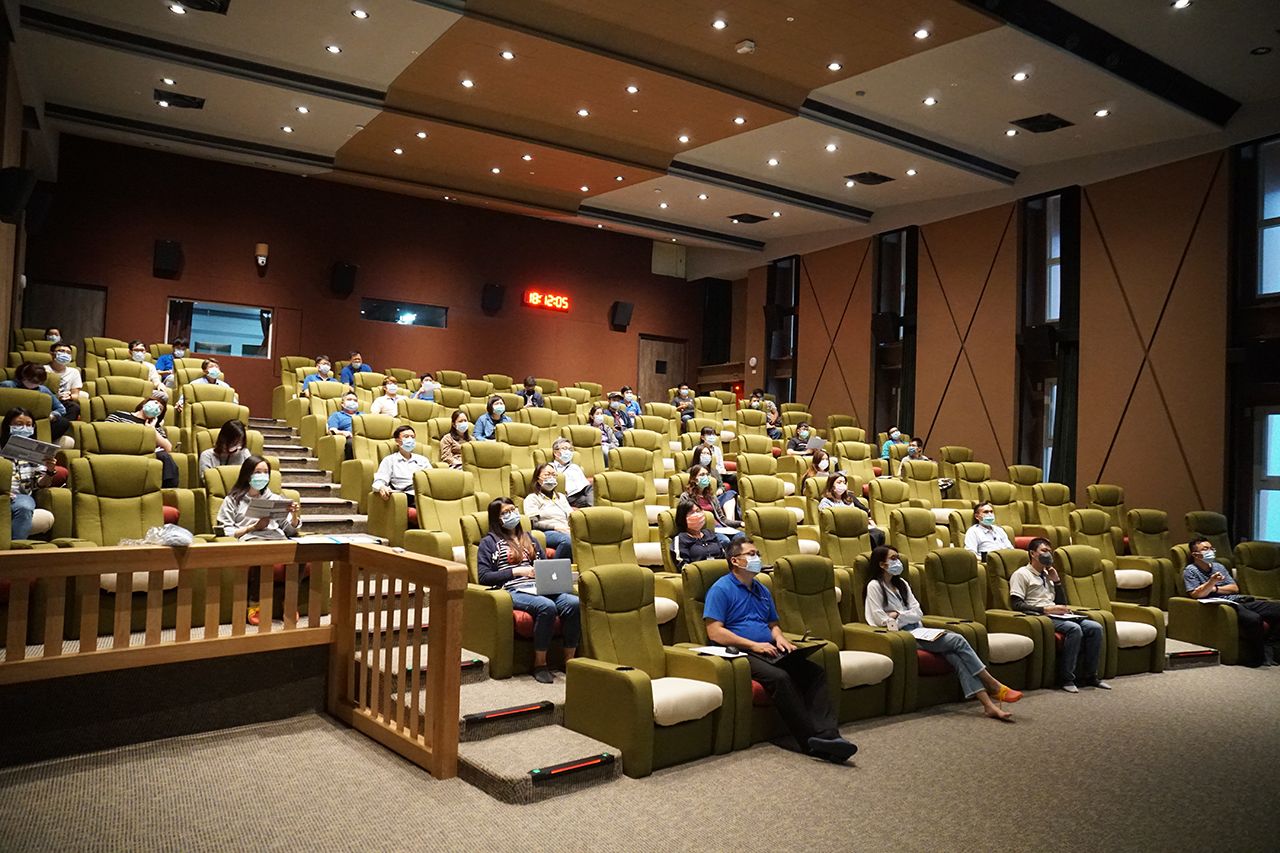
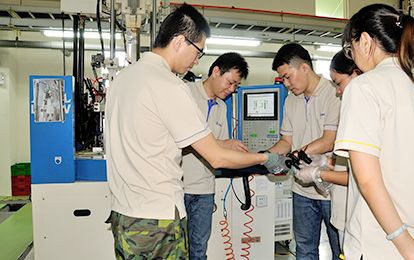
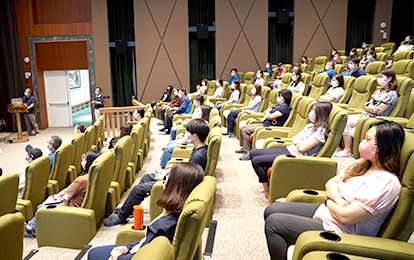
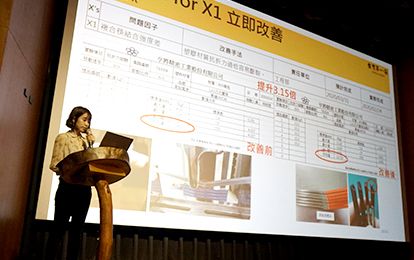
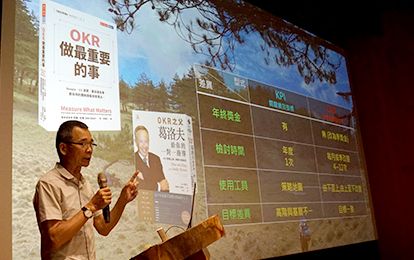
A defined percentage of Layana's annual revenue is dedicated to education and training programs. The company runs routine in-house programs of Six Sigma, IATF 16949, quality circles and TPS consultant programs, with small-group education inside every department so methodology lives where the work happens.
Employees are encouraged to study at domestic universities or abroad. As a matter of company policy, any employee who obtains a college degree or professional certification receives a salary raise and monetary rewards — turning personal study into a structured career step, not a private hobby.
For the wider methodology these trainings serve, read our IATF 16949 explainer, the Six Sigma program and the Quality Control Circles page.
The Five IATF 16949 Core Tools
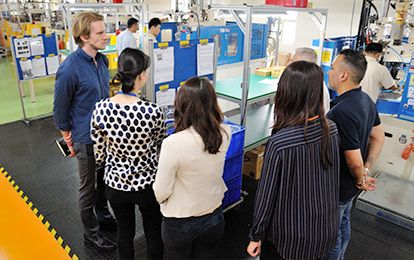
The shared language of automotive quality, taught to every relevant engineer and operator at Layana. Around them sits small-group education inside every department, so methodology is learned next to the machine — not just in a classroom.
Statistical Process Control
Statistical methods — control charts, capability indices — to monitor production and catch drift before it becomes a defect.
Measurement Systems Analysis
Quantifying the variation contributed by the measurement itself — gauge R&R, bias, linearity — so observed process variation is real, not noise.
Failure Mode & Effects Analysis
A team-based, proactive method that identifies potential failures in a design or process, ranks them, and drives preventive action.
Advanced Product Quality Planning
A structured cross-functional approach from concept to validation, synchronising design, manufacturing, supplier and customer activity.
Production Part Approval Process
The standard submission by which a supplier proves its production process can consistently meet customer engineering and quality requirements.
Small-Group Education — Every Department
Each department runs its own small-group sessions, keeping the core methodologies live and contextual to the specific work cell.
Layana's 9 Skill, Workplace & Problem-Solving Programs
Around the IATF core tools sits a stack of nine daily programs — three for licensed credentials, three for how the work is done, and three for the problem-solving disciplines every employee uses.
| Program | Stream | What It Does |
|---|---|---|
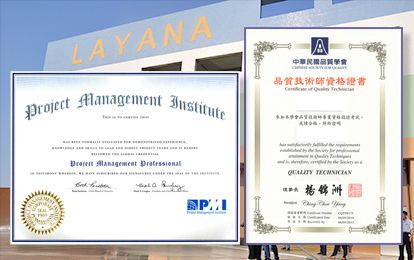
| ERP / CQT / CQE / PMP | Licensing Skills training | Structured paths for ERP, Certified Quality Technician, Certified Quality Engineer and Project Management Professional credentials. |
| Technical Research Seminar | Seminar Skills training | Regular technical seminars to share research, deep-dive new processes and align engineers across disciplines. |
| Morning Meeting | Daily Rhythm Skills training | Daily morning meeting — the operating heartbeat where targets, issues, learnings and changes are surfaced before the shift starts. |
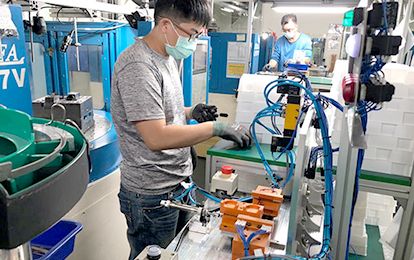
| On-the-Job Training | OJT Working at Layana | Capability is built where the work is done — operators learn the standard from experienced colleagues, on the actual line and tool. |
| Technical Apprenticeship | Apprenticeship Working at Layana | A structured apprenticeship that pairs new technical staff with senior engineers — a deliberate transfer of tooling and process know-how. |
| New Leadership Principles | Leadership Working at Layana | A leadership-development thread that grows the next generation of team leaders inside Layana — by practised behaviour, not title alone. |
| 5 Whys | Root-cause Problem-solving | Drill from a symptom down to its root cause. Every employee is trained to ask "why?" five times — and to fix the cause, not the symptom. |
| TQM · TPM · TPS · Lean 6σ | Stacked Methodology Problem-solving | Total Quality Management, Total Productive Maintenance, Toyota Production System and Lean Six Sigma — end-to-end improvement methodology. |
| 5S | Workplace Organisation Problem-solving | Sort, Set in order, Shine, Standardise, Sustain — the workplace foundation under safe, efficient and repeatable production. |


Awards & Recognition
Since day one, Layana has strived to be a customer-centric company. We are honoured to be recognised for the work we do on behalf of our customers, employees, and communities — here are some recent awards.
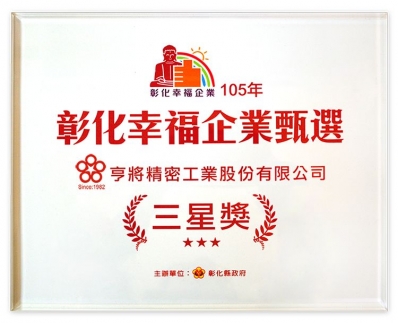
Happy Enterprise — 3 Star
Honoured with the 3 Star award for workplace wellbeing and corporate happiness.
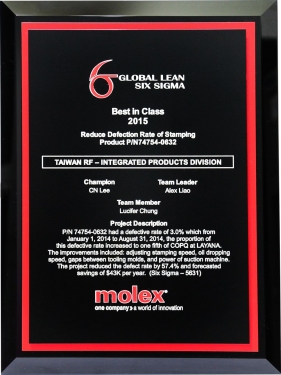
Molex Best in Class Medal
"Best in Class" medal from Molex (for 2015 performance) — supplier excellence.
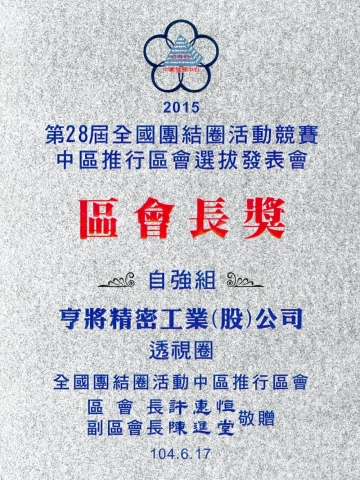
Taiwan Continuous Improvement
Central District President's Award for Continuous Improvement.
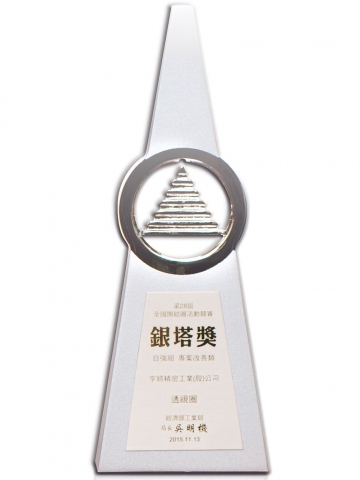
Silver Tower Prize
Recognised with the Silver Tower Prize for operational and quality excellence.
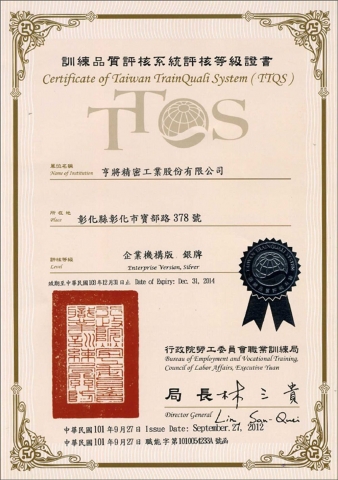
TTQS
Taiwan TrainQuali System — recognition for training-quality management.
Training Is How We Work, Not What We Schedule
A learning culture is only as real as its daily output. At Layana, the policy of "lifetime learning" is enforced by a fixed share of annual revenue, executed through the IATF 16949 core tools and the nine surrounding programs, and verified by outside awards — every one of them in active use, not a slogan in a brochure.
For customers, the practical result is a supplier whose operators are trained to the same SPC, MSA, FMEA, APQP and PPAP language as the engineers, whose problems are diagnosed with the 5 Whys, whose floor is held to 5S, and whose people earn money for getting better. Predictable inputs — predictable outputs.
"We want to be better than better."
— Layana working philosophyFrequently Asked Questions about Training Programs
Layana runs routine in-house programs covering the IATF 16949 core tools (SPC, MSA, FMEA, APQP, PPAP), Six Sigma, Quality Control Circles (QCC), TPS (Toyota Production System) consultant programs and small-group education in each department. On top of that, employees train on Lean Six Sigma, TQM, TPM, the 5 Whys, 5S, On-the-Job Training and a Technical Apprenticeship Program, plus an ERP / CQT / CQE / PMP licensing track.
SPC (Statistical Process Control), MSA (Measurement Systems Analysis), FMEA (Failure Mode and Effects Analysis), APQP (Advanced Product Quality Planning) and PPAP (Production Part Approval Process). Layana trains every relevant engineer and operator on all five.
Yes. Employees are encouraged to study at domestic universities or abroad. As a matter of company policy, employees who obtain a college degree or professional certification receive a salary raise and monetary rewards.
A defined percentage of Layana's annual revenue is dedicated to education and training programs — making learning a structurally funded part of the business, not a one-off line item.
Recent recognitions include the Happy Enterprise 3 Star Award (2016), Molex 'Best in Class' Medal (2016), Taiwan Continuous Improvement Award — Central District President's Award (2015), Silver Tower Prize (2015) and Taiwan TrainQuali System (TTQS, 2012).
TTQS — the Taiwan TrainQuali System — is Taiwan's national training-quality evaluation framework administered by the Ministry of Labor. It assesses how an organisation plans, designs, delivers, reviews and improves its training programs. Layana achieved TTQS recognition in 2012.
The 5 Whys is a root-cause analysis technique that iteratively asks "why?" to drill from a symptom down to the underlying cause. At Layana every employee is trained to use it so problems get fixed at the root rather than the surface.
Training is the foundation under every other quality programme at Layana — IATF 16949, Six Sigma, Quality Assurance, Quality Inspection and Quality Control Circles all depend on the same SPC, MSA, FMEA, APQP and PPAP fluency. The training programme is what keeps those methodologies live across the workforce.